


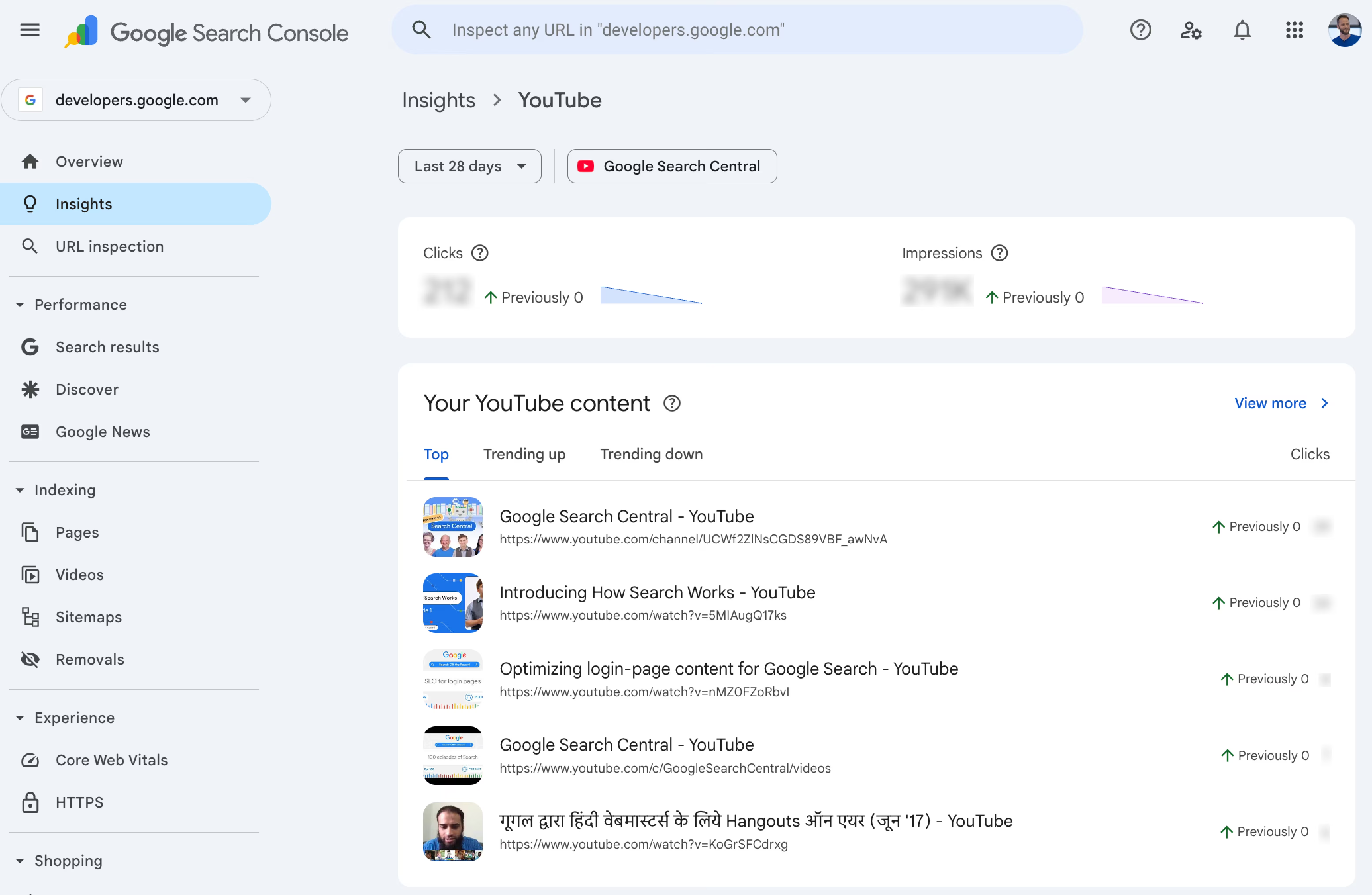
Google Search Console just added something marketers have wanted for years: social channel performance data. As of December 8, 2025, the Insights report now includes metrics from YouTube, TikTok, and Instagram, showing clicks, impressions, trending content, and search queries for your social profiles directly inside Search Console. The catch? It's an experiment with limited rollout, and Google automatically identifies which channels to connect. You can't manually add them yet.
Why This Matters Now
46% of Gen Z prefer using social media over Google to find information. When Google's own research shows that 40% of 18-24 year olds search TikTok or Instagram for restaurant recommendations instead of Google Maps, you know search has evolved.
Google isn't fighting this shift, they're adapting to it.
The new social channels feature acknowledges what marketers already know: your digital presence isn't just your website anymore. It's your YouTube channel with 50,000 subscribers, your TikTok account getting 2 million monthly views, and your Instagram profile where half your customer inquiries happen through DMs.
For years, tracking this meant juggling Google Analytics, YouTube Analytics, Instagram Insights, and maybe a third-party tool to connect the dots. Google is finally starting to unify this data, at least for search visibility. This matters because 77% of Gen Z use TikTok for product discovery, spending an average of 89 minutes per day on the app. These aren't casual browsers, they're your next customers.
What Data You'll Actually See
The new section provides five key metrics for your connected social channels:
- Total Reach: Total clicks and impressions your social channels receive from Google Search. This isn't about people scrolling Instagram, it's traffic from someone Googling your brand and clicking through to your social profile in search results.
- Content Performance: Which social posts or videos actually rank in Google Search. You'll see your top-performing social pages and content trending upward or losing traction.
- Search Queries: The actual search terms people use to find your social profiles. If you see "best [your product] reviews YouTube" driving clicks to your channel, you know exactly what to optimize in your video descriptions.
- Audience Location: Geographic breakdowns showing where your search traffic originates. For example, a Berlin-based fashion brand could discover that 60% of its TikTok Google Search clicks come from the US rather than Europe, insight that would inform content timing and language strategy.
- Additional Traffic Sources: Performance across Image Search, Video Search, News Search, and Google Discover.
How to Access It (If You're Eligible)
This is a limited experiment rolling out to select websites only. You can't opt in or manually force connections.
If you're in the test group:
- Log into Google Search Console
- Navigate to the Insights report
- Look for a prompt saying "Add Social Channels"
- Click to confirm the social profiles Google detected
- That's it, data starts flowing
What Google looks for when matching accounts:
- Links from your website to social profiles
- Consistent branding between site and social accounts
- Structured data markup indicating social profiles
- Brand mentions and cross-references
If you don't see the prompt, you're not in the test group yet. Google will likely expand access throughout 2025.

What This Changes for Your Strategy
Treat Social Profiles as SEO Assets
If people search "[Your Brand] Instagram" 10,000 times monthly, your Instagram bio needs to clearly state what you do, because it's now searchable. Same for YouTube video descriptions. If "Dataslayer pricing YouTube" drives traffic to review videos, that phrase should appear in relevant descriptions.
Identify Content Gaps
Notice a topic performs exceptionally well on your TikTok (high Google Search clicks), but you don't have a blog post about it? That's a content opportunity. Search demand exists, and you already know the topic resonates.
This connects to broader shifts in how search works. As AI Overviews change traditional SEO, having content distributed across multiple formats (web, video, social) becomes more critical for visibility.
Track "Brand + Platform" Searches
Monitor how people search for your brand:
- "[Brand] YouTube" vs "[Brand] Instagram" vs "[Brand] website"
- Rising searches for "[Brand] TikTok" signal where your audience expects to find you
- Dropping searches for "[Brand] Twitter" suggest it's time to shift resources
Stop Separating SEO and Social Teams
The old model: SEO team focuses on website, social team manages TikTok, and neither talks to the other.
The new reality: Your TikTok videos rank in Google Search. Your YouTube content appears in search results. Your Instagram profile shows up for branded queries. If these aren't part of your SEO conversations, you're missing data.
The Bigger Picture: Google's Social Search Response
Google's integration isn't random, it's a direct response to behavioral shifts:
Gen Z Search Habits:
- 83% use TikTok daily (2025 data)
- 41% treat TikTok as a search engine, not just social media
- 48% plan to buy more through social media in 2025 vs 2024
When Google's Senior VP Prabhakar Raghavan admitted that "almost 40% of young people, when they're looking for a place for lunch, don't go to Google Maps or Search, they go to TikTok or Instagram," it wasn't speculation. It was internal research showing a fundamental shift.
Social Commerce Explosion: Global social media usage hit 63.9% of the world's population, averaging 2 hours 21 minutes daily. TikTok Shop and Instagram Shopping aren't side features, they're primary purchase channels for younger audiences.
Google isn't trying to compete with TikTok. They're acknowledging that "search" now happens across platforms. Similar to how voice search changed SEO strategy, social search requires marketers to rethink where and how users discover brands.
What's NOT Included (Yet)
Platforms: Currently YouTube, TikTok, and Instagram only. Not X (Twitter), LinkedIn, Facebook, Pinterest, or Threads. Google may expand if the experiment succeeds.
Data Type: This shows only how social channels perform in Google Search, not native social analytics like feed views, engagement metrics, follower growth, or revenue from TikTok Shop.
Ranking Impact: This is a reporting feature. It does NOT affect your search rankings, boost SEO by linking accounts, or act as a ranking signal. Your social presence might indirectly support brand authority, but adding channels to Search Console doesn't improve rankings.
Preparing While You Wait
Even without access, take these steps:
1. Audit Social-Website Connections
- Add social media links in your website footer
- Implement schema markup for social profiles using schema.org/Organization
- Ensure bios link back to your website
- Use consistent branding across all platforms
2. Optimize Social Profiles for Search
Treat social bios like meta descriptions:
- Include primary keywords
- State clearly what you do
- Add location for local search
- Use searchable handles, not cryptic usernames
3. Create Cross-Platform Content
Publish content that works across web and social:
- YouTube videos embedded on blog posts
- TikTok videos answering FAQ questions also covered in help docs
- Instagram posts linking to deeper website content
When your social content already complements your website, you'll be ready when data flows in.
Pulling It All Together
If you're managing multiple social channels alongside website analytics, consolidating data becomes critical. Search Console now shows social channel performance from search, but you still need native social metrics, ad performance, and website conversions in one place.
This is where Dataslayer helps. Pull data from Google Search Console, Google Analytics 4, TikTok Ads, Instagram Insights, YouTube Analytics, and 50+ other sources into Google Sheets, Looker Studio, BigQuery, or Power BI. When Search Console only gives you search visibility for social, Dataslayer fills in engagement, revenue, and ad performance.
Want to see how social channels drive both search visibility and conversions? Try Dataslayer free for 15 days to connect all your marketing data in one dashboard.
FAQ
Can I manually add my social channels to Search Console?
No. Google automatically identifies and links social profiles to your website based on their algorithms. If you're eligible, you'll see a prompt in Search Console Insights to confirm the channels Google found. There's no way to request specific channels or force connections.
Does linking social channels improve my SEO rankings?
No. This is purely a reporting feature. Adding social channels doesn't act as a ranking signal or boost your website's authority. However, a strong cross-platform presence might support brand recognition and E-E-A-T indirectly.
Will this expand to more platforms?
Google hasn't announced plans beyond YouTube, TikTok, and Instagram. However, successful adoption could lead to LinkedIn, X, Pinterest, or Facebook support in future updates. Monitor the Google Search Central Blog for announcements.
How often does social channel data update?
Google hasn't specified update frequency, but Search Console data typically has a 1-2 day delay. Early users report occasional data latency, normal for experimental features and likely to improve as the rollout matures.
Does this show social media engagement metrics?
No. You'll see clicks and impressions from Google Search to your social profiles, but NOT native social metrics like likes, comments, shares, follower counts, or engagement rates. For that, you still need platform-specific analytics or aggregation tools.
What if Google detects the wrong social channels?
Currently, there's no manual override. If Google incorrectly associates a social channel or misses one you own, submit feedback through the Search Console interface (thumbs up/down buttons or "Submit feedback" link). This may help improve the detection algorithm.
Can I track Instagram Reels separately from posts?
The feature shows top-performing social pages, which could include individual Reels, but granularity depends on how Google indexes your content. Early reports suggest video content (Reels, TikToks, YouTube videos) appears in the content performance section if it ranks in Google Search.
What to Do Next
If You Have Access:
- Link confirmed social channels immediately
- Export baseline data before making changes
- Identify top-performing social content in search
- Cross-reference with native social analytics
- Optimize social bios with search keywords
- Share insights with your social media team
If You Don't Have Access:
- Ensure your website clearly links to all social profiles
- Implement schema.org markup for social accounts
- Optimize social bios for branded searches
- Check Search Console regularly for feature rollout
For Everyone: Stop treating SEO and social as separate strategies. Your TikTok is an SEO asset. Your YouTube channel ranks in search. Your Instagram profile answers branded queries. The lines have blurred, plan accordingly.
This shift mirrors broader changes in how people search and discover brands. Just as Generative Engine Optimization requires new tactics for AI search, social channels in Search Console demands a unified approach to digital presence.
The Bottom Line
Google's social channels integration isn't just a new feature, it's recognition that search has fundamentally changed. When Gen Z searches TikTok for product reviews, Instagram for restaurant recommendations, and YouTube for how-tos, traditional search engines must adapt.
This update gives marketers what they've needed: unified visibility into how audiences find them across search and social. It won't replace native social analytics, but it fills a crucial gap, showing which social content ranks in Google.
The rollout is limited now, but as Google expands this experiment throughout 2025, expect social channel data to become as standard as website analytics. The question isn't whether to prepare but whether you're ready when access arrives.



