


In the ever-evolving landscape of digital marketing, understanding search intent and keyword strategy remains fundamental to success. Google Keyword Planner continues to be one of the most powerful free tools available for marketers, advertisers, and SEO professionals who want to make data-driven decisions about their content and advertising campaigns.
However, many marketers only scratch the surface of what this tool can do. After working with hundreds of marketing teams and analyzing countless keyword strategies, I've discovered that the difference between average and exceptional results often comes down to how deeply you understand and utilize Google Keyword Planner's capabilities. In this comprehensive guide, we'll explore how to extract maximum value from Google Keyword Planner in 2026, uncover advanced strategies that professionals use, and show you how to integrate this data into your broader marketing analytics workflow using platforms like Dataslayer.
What is Google Keyword Planner and Why Does It Matter?
Google Keyword Planner is a free research tool within Google Ads designed to help advertisers discover relevant keywords for their campaigns and understand search volume data. Originally created for paid search advertisers, it has become an indispensable resource for SEO professionals, content marketers, and digital strategists across industries. The tool provides direct access to Google's search data, which means you're working with the most accurate and comprehensive information available about what people are actually searching for.
The Evolution of Keyword Research
Keyword research has transformed dramatically over the past decade. Gone are the days when simply targeting high-volume keywords would guarantee success. The search landscape in 2026 has matured into something far more nuanced and sophisticated. Today's successful approach requires understanding not just what people search for, but why they search for it, what they expect to find, and how their needs vary across different contexts and devices.
Modern keyword research demands consideration of search intent, which means recognizing whether users want information, are ready to make a purchase, or simply need to navigate to a specific site. Competition levels have become more important than ever, as the digital space has grown increasingly crowded in nearly every niche. Long-tail opportunities now represent some of the most valuable targets, as these specific, lower-volume keywords often convert significantly better than their broad counterparts. Seasonal trends play a crucial role in planning content calendars and advertising budgets, while the distinction between local and global reach has become essential for businesses operating in specific geographic markets.
Google Keyword Planner provides insights into all these areas, making it an essential starting point for any keyword strategy. What sets it apart from third-party tools is that it draws directly from Google's own data, offering unparalleled accuracy for search volume estimates and trends. This direct connection to the source makes it particularly valuable for both paid advertising planning and organic SEO strategy.
Getting Started: Setting Up Google Keyword Planner
Before diving into advanced strategies, let's ensure you're properly set up to access all of Google Keyword Planner's features. While the setup process is straightforward, there are several considerations that can affect the quality and granularity of data you receive.
Prerequisites and Access
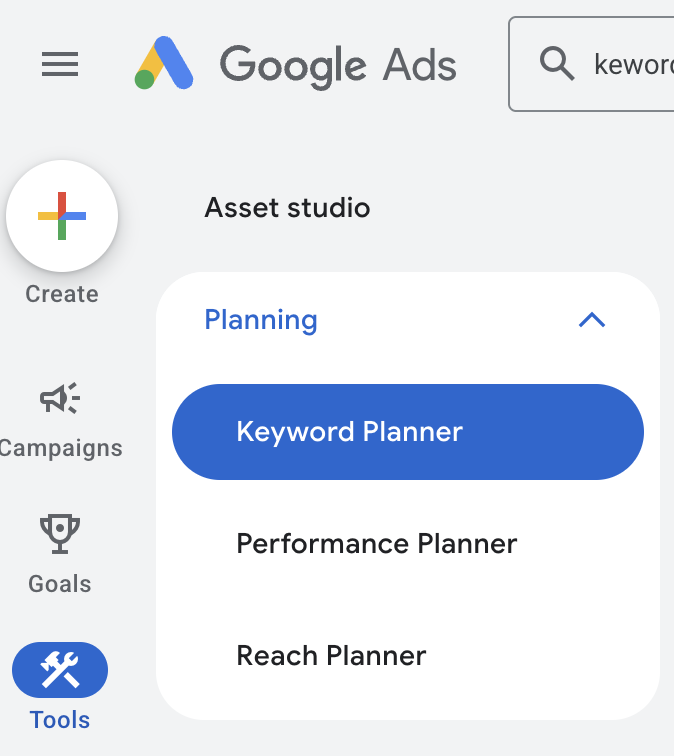
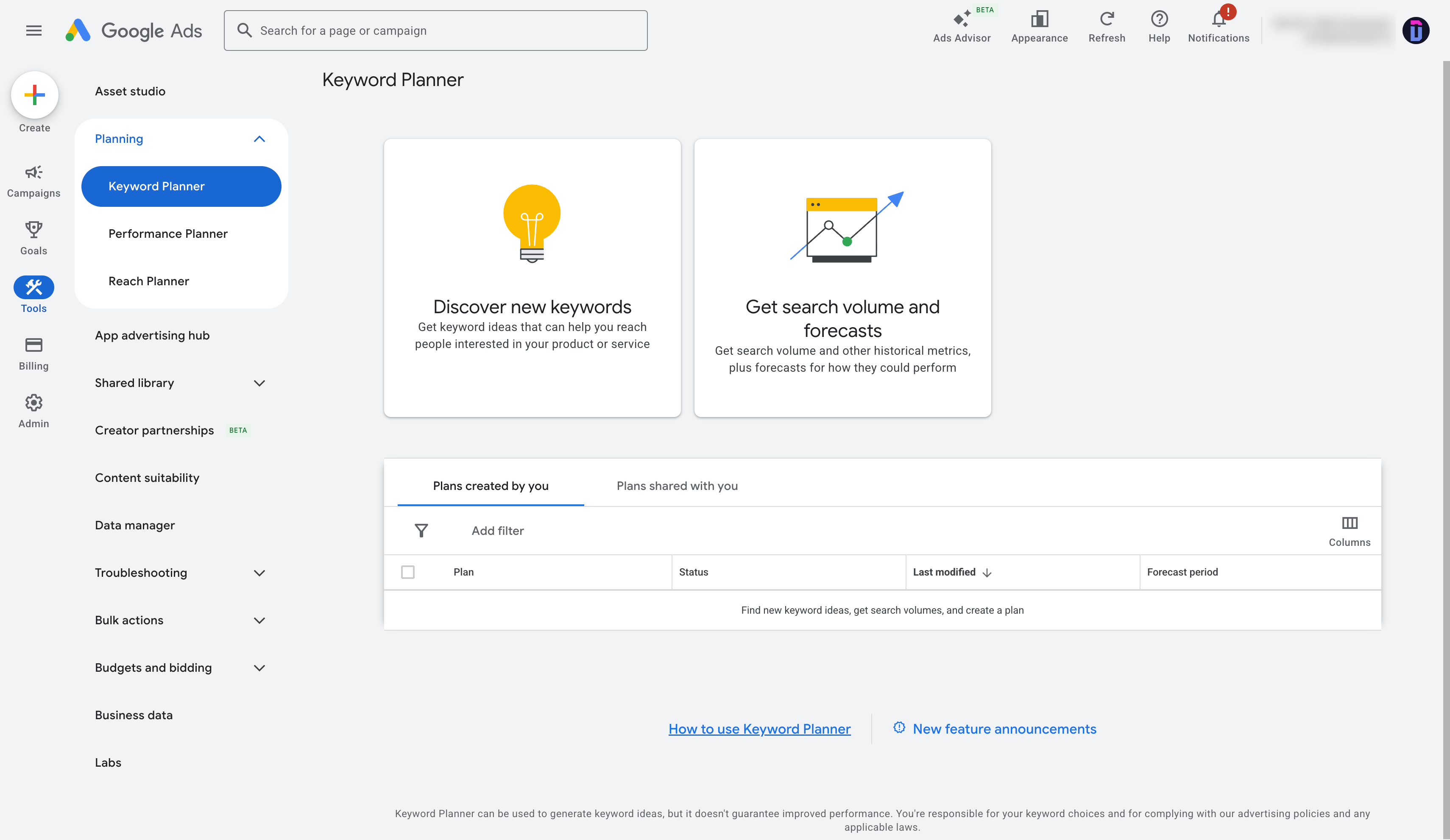
To use Google Keyword Planner, you'll need a Google Ads account, which is free to create. Once you have an account, you can navigate to Tools & Settings, then Planning, and finally Keyword Planner. The interface is designed to be intuitive, but there's an important distinction that many new users don't realize initially.
While you can access Keyword Planner without running active ads, Google provides more granular data to accounts with active advertising campaigns. Without an active campaign, you might see search volume ranges like "10K-100K" rather than exact numbers like "47,300." This limitation has been in place for several years, and in 2026, it remains one of Google's ways of encouraging advertiser participation. For serious keyword research, having at least a small active campaign can be worthwhile simply for the data quality improvement.
Understanding the Interface
Google Keyword Planner offers two primary research methods that serve different purposes in your workflow. The "Discover new keywords" option allows you to start with topics, phrases, or even a competitor's website to generate keyword ideas. This is ideal when you're exploring a new market, developing content for emerging topics, or trying to understand what your competitors are targeting.
The "Get search volume and forecasts" option lets you upload or paste a list of existing keywords to see their metrics. This approach is more efficient when you already have a preliminary list from brainstorming sessions, customer conversations, or other research tools, and you want to validate these ideas with actual search data. Understanding when to use each approach is crucial for efficiency, as starting with the right method can save hours of unnecessary work.
Advanced Strategies for Google Keyword Planner
Now that you understand the basics, let's explore professional-level strategies that will set your keyword research apart from competitors. These techniques have been refined through years of testing and implementation across diverse industries and markets.
Leveraging Competitor Intelligence
One of Google Keyword Planner's most underutilized features is the ability to analyze competitor websites. This capability goes far beyond simply copying what your competitors are doing. Instead, it provides a window into how Google categorizes and understands their content, which can reveal strategic opportunities you might otherwise miss.
When you select "Discover new keywords" and choose "Start with a website," you can enter your competitor's URL and decide whether to analyze just that specific page or their entire site. This reveals the keywords Google associates with their content, providing insights into their SEO strategy and, more importantly, potential gaps in your own approach. The tool essentially reverse-engineers what Google thinks a website is about, which is invaluable for understanding both competitive positioning and opportunities.
Here's a strategic approach that professional SEOs use: don't just analyze direct competitors. Look at websites that rank for your target keywords but aren't necessarily in your industry. This can reveal unexpected keyword opportunities and content angles that your direct competitors might be overlooking. For example, if you sell project management software, analyzing not just other software companies but also productivity blogs, business consultants, and even academic sites about organizational behavior can uncover unique keyword opportunities that sit outside the obvious competitive landscape.
Mastering Keyword Filters and Refinements
Google Keyword Planner's filtering capabilities allow you to focus on the most valuable opportunities for your specific situation, but many users never venture beyond the default view. The real power comes from combining multiple filters strategically to identify what I call "sweet spot" keywords—terms with substantial search volume, manageable competition, and high commercial intent.
The search volume range filter helps you focus on keywords within your realistic reach based on your domain authority and resources. If you're a new website in a competitive niche, targeting keywords with millions of monthly searches is probably not the best use of your time. Instead, filtering for keywords in the 1,000 to 10,000 monthly search range might reveal opportunities where you can actually gain traction.
Competition level filtering is particularly important for paid search campaigns, but it also provides insights for organic SEO. High competition in paid search typically correlates with high commercial intent, which means these keywords are worth money to advertisers. However, high competition also means you'll face well-funded competitors, so balancing between high-potential keywords and achievable targets becomes crucial. The organic impression share metric, when available, helps you understand what percentage of available impressions competitors are capturing, giving you a sense of market saturation.
The top of page bid range provides valuable intelligence about commercial intent and competitive intensity. When advertisers are willing to pay $50 or more per click, you know that keyword has serious business value. Even if you're focused on organic search, this information helps prioritize which keywords might drive the most valuable traffic to your site.
Understanding Seasonal Trends and Forecasting
One advantage Google Keyword Planner has over many other SEO tools is its access to historical search volume data and forecasting capabilities. This temporal dimension of keyword research is often overlooked, but it can dramatically improve your strategic planning and resource allocation.
When you navigate to the historical metrics section, you can analyze month-over-month trends for target keywords going back several years. This reveals seasonal patterns that are crucial for planning. For instance, you might discover that searches for "home office setup" spike every January when people are setting New Year's resolutions and again in September when students return to school. With this knowledge, you can create and optimize content months in advance, giving yourself time to build authority and backlinks before the crucial period arrives.
The forecasting feature takes this a step further by projecting future performance based on historical patterns and current trends. While no forecast is perfect, Google's predictions are based on more complete data than any third-party tool can access. For e-commerce businesses, understanding that searches for "holiday gift ideas" will spike in November allows you to plan inventory, advertising budgets, and content calendars with confidence. For service businesses, identifying when your industry experiences seasonal interest fluctuations helps you allocate marketing resources more efficiently throughout the year.
Long-Tail Keyword Discovery
While high-volume head terms are attractive and often dominate keyword research discussions, long-tail keywords frequently provide better ROI due to lower competition and higher conversion rates. The mathematics of this are straightforward: a keyword with 100,000 monthly searches might seem more valuable than one with 1,000 searches, but if the high-volume keyword converts at 0.5% and the long-tail keyword converts at 5%, the long-tail keyword actually delivers more customers.
Finding valuable long-tail keywords requires a systematic approach. The "Refine keywords" option in Google Keyword Planner allows you to filter by specific terms, which helps narrow down broad keyword lists to more specific opportunities. Question-based keywords, which typically include who, what, where, when, why, or how, are particularly valuable because they represent information-seeking behavior that you can address with targeted content.
The "Keyword ideas by brand/non-brand" section reveals how people search for topics related to your industry versus how they search for specific company names. This distinction is crucial for understanding where you should focus competitive content versus where you need to build brand awareness. Exporting large datasets and using spreadsheet formulas to identify patterns can uncover long-tail opportunities that aren't immediately visible in the interface.
Long-tail keywords typically contain three or more words and represent more specific search intent. The difference between "project management software" and "best project management software for remote teams under $50 per month" illustrates this perfectly. The second phrase has clearer commercial intent, more specific requirements, and likely faces less competition, making it a more valuable target for many businesses despite its lower search volume.
Geographic and Language Targeting
Google Keyword Planner allows you to refine searches by location and language, which is critical for businesses operating in specific markets or multiple regions. The geographic dimension of keyword research is often more important than marketers realize, as search behavior, competition levels, and even the language used to describe the same concepts can vary dramatically across locations.
Starting with broad geographic targeting and then narrowing based on where your best opportunities exist is generally the most efficient approach. You might discover that a keyword has 100,000 monthly searches globally but only 5,000 in your target market. Conversely, you might find that competition is dramatically lower in certain regions, making them attractive targets for expansion. The cost-per-click data can vary by a factor of ten or more between different locations, which has implications for both advertising budgets and the commercial value of organic rankings in those regions.
For international businesses, this feature is invaluable for understanding how keyword demand varies across markets and identifying which regions warrant localized content strategies. What's called "sneakers" in the United States is "trainers" in the United Kingdom and "tennis shoes" in some regions. These cultural and linguistic variations in keyword usage must inform your content strategy if you want to compete effectively in multiple markets.
Integrating Google Keyword Planner Data into Your Marketing Workflow
While Google Keyword Planner is powerful on its own, its true potential is realized when you integrate its data with your broader marketing analytics strategy. The challenge most marketing teams face isn't accessing keyword data—it's turning that data into actionable insights and tracking how keyword decisions impact business outcomes over time.
The Challenge of Manual Data Export
Many marketers struggle with the repetitive and time-consuming process of regularly exporting data from Google Keyword Planner, combining this data with information from other marketing platforms, creating comprehensive reports that show how keyword research translates to actual performance, and tracking changes over time to identify trends and opportunities. This manual workflow not only consumes valuable time that could be spent on strategy and optimization, but it also introduces opportunities for errors and delays that can impact decision-making.
The typical workflow involves downloading CSV files from Google Keyword Planner, cleaning and formatting the data in spreadsheets, manually matching keyword data with performance metrics from other platforms, and then creating reports or presentations for stakeholders. By the time this process is complete, the data may already be outdated, and the entire cycle needs to begin again. For teams managing multiple clients or business units, this approach simply doesn't scale effectively.
Automating Your Keyword Research Workflow
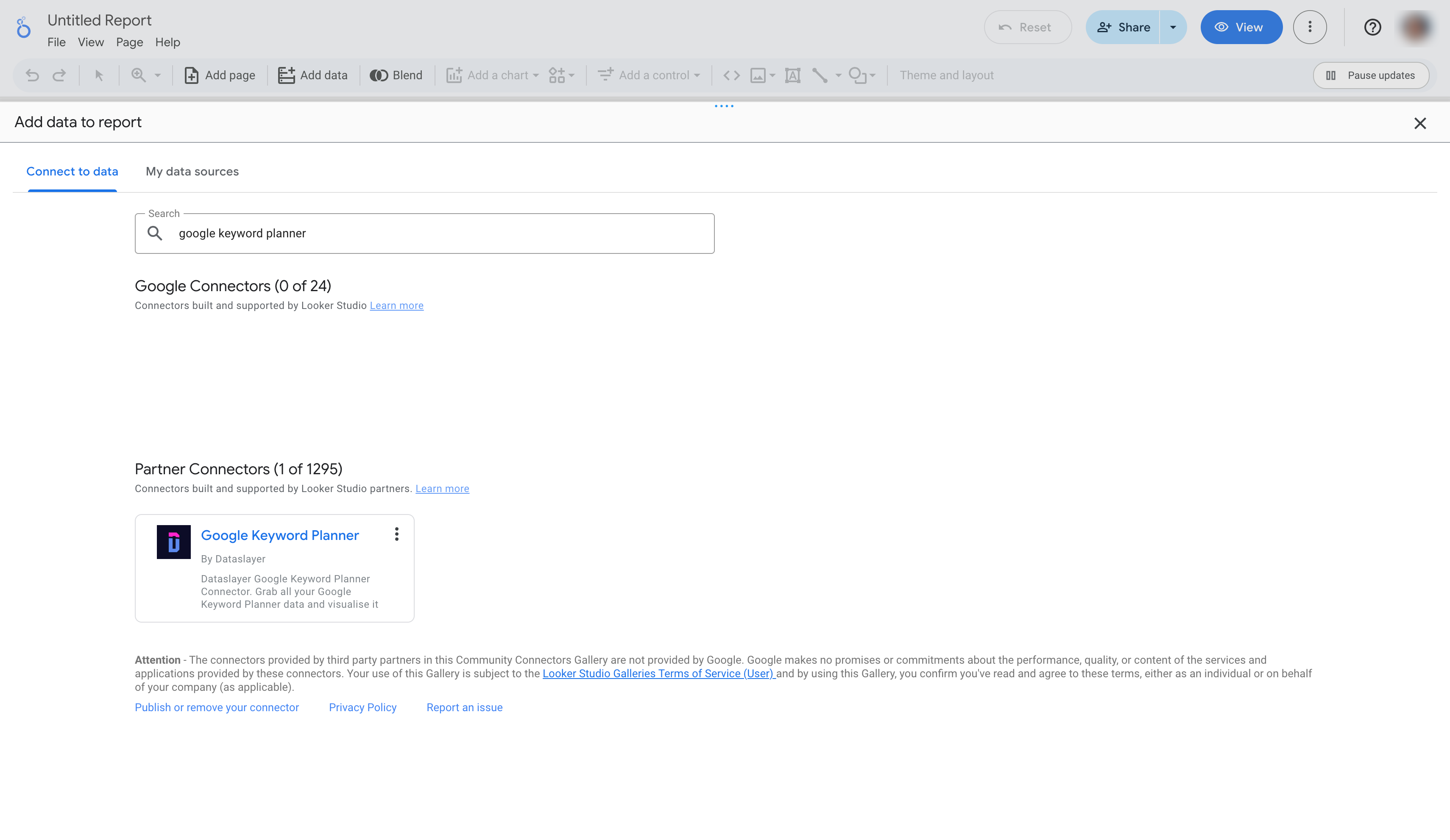
This is where automated data integration becomes essential, and Dataslayer's Google Keyword Planner connector addresses these challenges directly. By automatically extracting your keyword data and delivering it to your preferred destination—whether that's Google Sheets, Looker Studio, or your data warehouse—you eliminate the manual bottleneck entirely.
The benefits of this automation extend beyond simple time savings, though that alone can be substantial. Real-time insights mean you can access up-to-date keyword metrics without delay, allowing you to respond quickly to emerging trends or competitive changes. Cross-platform analysis becomes possible when you combine keyword data with performance metrics from Google Analytics 4, Google Search Console, and other sources, creating a complete picture of how keyword strategy translates to business results.
Historical tracking is another crucial advantage that's difficult to achieve with manual exports. By automatically capturing keyword data over time, you can build databases that reveal long-term trends, seasonal patterns, and the impact of algorithm updates or competitive changes. This longitudinal view of your keyword landscape is invaluable for strategic planning and understanding what's working over time versus what might be producing temporary results.
Team collaboration improves dramatically when everyone can access live dashboards rather than static reports that become outdated the moment they're created. Stakeholders can explore the data themselves, drilling down into specific keywords or time periods that interest them, without requiring a data analyst to create custom reports for every question.
Creating Comprehensive Google Keyword Planner Dashboards
Once your data is flowing automatically through a platform like Dataslayer, you can build powerful dashboards that combine keyword research data from Google Keyword Planner with actual ranking performance from Google Search Console, traffic and conversion data from Google Analytics 4, paid search performance from Google Ads, and competitor insights from SEO tools like Ahrefs or SEMrush.
This holistic view enables you to make informed decisions about which keywords to target, where to allocate content resources, and how to optimize your existing pages for better performance. For example, you might discover that a keyword with moderate search volume in Google Keyword Planner is actually driving significant traffic and conversions according to your Analytics data, suggesting that Google's search volume estimate might be conservative or that you're capturing an unusually high percentage of available traffic for that term.
Conversely, you might find that keywords with high search volume and strong rankings are delivering traffic that doesn't convert, indicating a mismatch between search intent and your content or offering. These insights are only possible when you connect keyword research data with performance data, creating a feedback loop that continuously improves your targeting decisions.
Common Google Keyword Planner Mistakes to Avoid
Even experienced marketers make critical errors when using Google Keyword Planner that can undermine their entire keyword strategy. Understanding these pitfalls helps you avoid wasting time and resources on ineffective approaches.
Focusing Solely on Search Volume
High search volume is seductive, but it doesn't automatically mean a keyword is valuable for your business. Relevance is the first consideration that many marketers overlook in their excitement about impressive search numbers. A keyword might have 100,000 monthly searches, but if it doesn't align with what you actually offer, that traffic will never convert. Search intent is equally critical—are searchers looking for information, comparing options, or ready to make a purchase? The answer to this question dramatically affects whether ranking for that keyword will drive business results.
Competition is another dimension that search volume alone can't reveal. A keyword with 100,000 monthly searches might seem more attractive than one with 1,000 monthly searches, but if the high-volume keyword is dominated by established competitors with massive budgets and authoritative domains, your chances of ranking are minimal. Meanwhile, the keyword with 1,000 monthly searches might represent clear purchase intent and face manageable competition, making it far more valuable for your business despite the lower numbers.
Conversion potential ties all these factors together. The ultimate question isn't how many people search for a term, but how many of those searchers will become customers. A keyword that drives 10,000 visitors who never convert is less valuable than a keyword that drives 100 visitors who convert at 10%, even though the traffic volume differs by a factor of 100.
Ignoring Negative Keywords
Google Keyword Planner isn't just about finding keywords to target—it's also about identifying keywords to exclude from your paid campaigns. This aspect of keyword research is often overlooked, yet it can have an enormous impact on advertising ROI. When you're analyzing keyword ideas, look for irrelevant variations that might trigger your ads but won't lead to conversions.
Terms with low commercial intent, such as those including "free," "DIY," or "how to make," often indicate that searchers want to do something themselves rather than purchase a solution. Job-seeking terms like "careers" or "jobs" waste budget unless you're actually recruiting. Competitor brand names can be valuable targets in some strategies, but they should be intentional choices rather than accidental includes.
Proper negative keyword management is an ongoing process, not a one-time task. As you run campaigns and gather data about which searches actually lead to conversions, you'll discover new terms to exclude. Building and maintaining comprehensive negative keyword lists can dramatically improve your ad campaign ROI by preventing wasted spend on irrelevant clicks that were never going to convert.
Not Considering Keyword Match Types
Google Keyword Planner shows data based on different match types, and understanding these differences is crucial for interpreting the data correctly and setting up effective ad campaigns. Broad match allows your ads to show for related searches, including variations, which provides maximum reach but less control. Phrase match triggers your ads for searches that include the meaning of your keyword, offering a middle ground between reach and precision. Exact match shows your ads for searches with the same intent as your keyword, providing the most control but the narrowest reach.
The search volume data you see in Keyword Planner represents broad match by default, which means it includes variations and related terms. When you actually set up campaigns with more restrictive match types, your potential reach will be smaller than the keyword planner suggests. Many marketers make budget and expectation-setting mistakes because they don't account for this difference between the broad match estimates in Keyword Planner and the tighter targeting they actually implement in their campaigns.
Overlooking the Forecast Feature
The "Get search volume and forecasts" tool provides valuable projections about expected clicks at different bid levels, estimated impressions, forecasted costs, and predicted conversion rates if you've set up conversion tracking properly. This forward-looking data helps you budget more effectively and set realistic expectations for campaign performance.
Many marketers use Keyword Planner only for historical search volume data and never explore the forecasting capabilities. This is a missed opportunity because the forecasts can help you model different scenarios, understand the budget required to achieve specific goals, and identify whether certain keywords are economically viable for your business before you invest significant resources in targeting them.
Beyond Google Keyword Planner: Building a Complete Keyword Research Stack
While Google Keyword Planner is an excellent starting point and provides data that no other tool can match for accuracy, comprehensive keyword research requires multiple data sources. Each tool brings unique strengths that complement the others, and professional keyword research in 2026 typically involves a strategic combination of resources.
Google Search Console shows you keywords you already rank for and their performance, which is invaluable for identifying quick optimization opportunities and understanding which of your existing content is already gaining traction. Google Trends reveals trending topics and helps you understand whether interest in a keyword is growing, stable, or declining, which affects whether that keyword is a good long-term investment. Tools like Answer the Public identify question-based queries that real people are asking, helping you create content that directly addresses user needs.
Social platforms like Reddit and Quora provide insights into how real people discuss topics in your industry, often using language that differs from what you might assume. These platforms can uncover long-tail keyword opportunities and content angles that more formal keyword research tools might miss. Competitor analysis tools like Ahrefs, SEMrush, or Moz provide competitive keyword intelligence, backlink analysis, and ranking difficulty scores that complement Google Keyword Planner's search volume and forecasting data.
Creating a Keyword Research Process
Successful SEO teams follow a systematic approach rather than treating keyword research as an ad hoc activity. The process typically begins with a discovery phase where you use Google Keyword Planner, competitor analysis, brainstorming sessions, and customer conversations to generate a broad list of potential keywords. This phase is about quantity and breadth—you want to cast a wide net and capture as many possibilities as you can.
The evaluation phase involves assessing these keywords based on relevance to your business, difficulty to rank for, and opportunity size. This is where you apply the various filters and metrics we've discussed to narrow down your list. Prioritization comes next, where you create a ranked list based on your specific resources, goals, and timeline. Not all valuable keywords can be targeted immediately, so deciding what to tackle first, second, and third requires strategic thinking about resource allocation.
Implementation means actually creating or optimizing content to target your priority keywords. This might involve writing new articles, updating existing pages, building landing pages, or developing entirely new website sections. The monitoring phase involves tracking rankings, traffic, and conversions to understand whether your keyword targeting is producing the desired results. Finally, the refinement phase involves adjusting your strategy based on performance data, doubling down on what's working and pivoting away from what isn't.
By integrating data from Google Keyword Planner with performance metrics from other platforms through Dataslayer, you can automate much of the monitoring and refinement phases, allowing you to focus on strategic decision-making rather than data collection and report generation.
Advanced Use Cases: Industry-Specific Applications
Different industries can leverage Google Keyword Planner in unique ways that reflect their specific business models and customer journeys. Understanding how to apply keyword research principles to your particular situation can dramatically improve results.
For e-commerce businesses, Google Keyword Planner is invaluable for identifying product-specific keywords with high commercial intent, discovering seasonal shopping trends before competitors act on them, optimizing product descriptions with relevant search terms that customers actually use, and finding long-tail keywords for niche products that might not justify advertising spend but can drive valuable organic traffic. The key is recognizing that product pages serve dual purposes as both transaction completion points and search landing pages.
B2B SaaS companies face a different challenge, as their customer journeys are typically longer and involve more research and consideration. Keyword research for these businesses should focus on industry terminology and pain points that prospects are searching for, comparison keywords that include phrases like "vs" or "alternative to" which indicate active evaluation, feature-specific searches that reveal what capabilities matter most to potential customers, and ways that prospects describe their problems before they know what solution category they need.
Local businesses need to approach keyword research with geographic modifiers as a primary consideration. Targeting location-specific keywords, identifying "near me" opportunities which have grown exponentially with mobile search, understanding local search volume trends that might differ from national patterns, and optimizing for neighborhood and city names all become crucial. The competitive landscape for local keywords is also fundamentally different, as you're typically competing with other businesses in your geographic area rather than national or international competitors.
Content publishers and media companies use Google Keyword Planner differently than businesses selling products or services. Their focus is on finding trending topics in their niche that will attract audience attention, identifying content gaps that competitors haven't filled thoroughly, discovering question-based queries that can become the foundation for FAQ content or article topics, and understanding seasonal content opportunities that allow them to plan editorial calendars months in advance.
Measuring Keyword Research Success
Having great keyword data is only valuable if you can measure its impact on your business goals. The connection between keyword research and business outcomes isn't always obvious, which is why establishing clear metrics and tracking systems is essential.
Organic search metrics provide the most direct measure of keyword research effectiveness. Tracking organic traffic growth over time shows whether your keyword targeting is expanding your overall visibility. Keyword ranking improvements for specific target terms reveal whether your optimization efforts are working. Organic conversion rate indicates whether the traffic you're attracting through keyword targeting actually converts to leads or customers. The number of pages ranking in the top ten results for target keywords provides a measure of your overall competitive position.
Content performance metrics add another layer of understanding. Time on page for keyword-optimized content reveals whether visitors find what they're looking for and engage with it. Bounce rate by keyword segment helps identify when there's a mismatch between search intent and content, even if you're ranking well. Internal link clicks from optimized pages show whether your content is successfully guiding visitors deeper into your site. Social shares and backlinks attracted by keyword-optimized content indicate that others find it valuable enough to reference and promote.
Business impact metrics tie keyword research directly to revenue and profitability. Lead generation from organic search quantifies how many potential customers your keyword strategy is producing. Revenue attributed to organic channels through proper conversion tracking demonstrates the financial return on your SEO investment. Customer acquisition cost for organic channels compared to paid advertising reveals the efficiency advantage of successful keyword targeting. Lifetime value of organic customers compared to other channels can reveal whether keyword-driven traffic produces more valuable long-term customers.
By connecting Google Keyword Planner data with these performance metrics through integrated dashboards built on platforms like Dataslayer, you can demonstrate the ROI of your keyword research efforts, identify which types of keywords drive the most valuable outcomes for your specific business, and continuously optimize your strategy based on actual performance rather than assumptions about what should work.
The Future of Keyword Research in 2026 and Beyond
As we move through 2026, search engines continue to evolve in ways that affect how we approach keyword research. Understanding these trends helps ensure your strategy remains effective as the landscape changes.
AI and machine learning have fundamentally changed how search engines understand queries. Google's algorithms increasingly understand context and intent rather than relying on exact keyword matches, which makes semantic keyword research more important than ever. This doesn't mean traditional keywords are obsolete, but rather that your content needs to comprehensively cover topics rather than just including specific phrases. Google Keyword Planner data still reveals what people are searching for, but your content strategy needs to address the underlying intent and related concepts rather than just targeting individual keywords.
Voice search optimization has become mainstream as voice-activated devices have proliferated and voice interfaces have become more accurate and useful. Conversational, question-based keywords that reflect how people actually speak rather than how they type have gained importance. Google Keyword Planner can help identify these queries, particularly when you filter for question-based keywords and longer, more natural phrases.
Entity-based SEO reflects Google's Knowledge Graph focus on understanding people, places, things, and concepts rather than just matching keywords. This requires a broader approach to topical authority where you establish your site as a comprehensive resource on subjects rather than just targeting individual keywords. Keyword research in this context becomes about understanding the full universe of related concepts and ensuring your content addresses them comprehensively.
Search intent diversification means that Google now shows different result types—featured snippets, videos, images, local packs, shopping results—based on what it believes users are looking for. This requires varied content strategies that go beyond traditional text-based pages. Google Keyword Planner can help you understand search volume for different types of queries, but you need to consider what format and structure will best serve that intent.
Visual search through platforms like Google Lens is making image-based searches more common, requiring new approaches to optimization that go beyond traditional keyword research. While Google Keyword Planner primarily focuses on text-based queries, understanding visual search trends should inform your overall content strategy, particularly for products, locations, and visual concepts.
Despite all these changes, understanding what people are searching for and why remains fundamental to digital marketing success. Google Keyword Planner continues to provide essential data for this understanding, especially when combined with modern analytics approaches that connect keyword research to business outcomes.
Conclusion: Making Google Keyword Planner Your Competitive Advantage
Google Keyword Planner remains one of the most valuable free tools available to digital marketers in 2026, providing direct access to Google's own search data in ways that third-party tools cannot match. However, extracting its full potential requires moving beyond basic keyword research to embrace a more strategic, data-driven approach that connects keyword insights to business outcomes.
The most successful marketers don't use Google Keyword Planner in isolation. They integrate it into a comprehensive marketing analytics workflow that combines keyword research with performance tracking, competitive intelligence, and business metrics. This holistic approach reveals not just what keywords have high search volume, but which keywords actually drive valuable results for their specific business situation.
By leveraging automation through platforms like Dataslayer, you can eliminate the manual data management that consumes so much time and creates opportunities for errors. This frees your energy for strategic decisions rather than tactical data collection, allowing you to focus on the insights and optimizations that actually move the needle for your business.
The key takeaways for mastering Google Keyword Planner in 2026 center on strategic application rather than just technical proficiency. Using competitor analysis to identify gaps in your strategy reveals opportunities your competitors might be missing. Focusing on search intent rather than just volume ensures your keyword targeting actually drives business results. Leveraging seasonal trends and forecasting for planning helps you allocate resources more efficiently. Implementing systematic filtering to find "sweet spot" keywords where you can realistically compete and win makes your efforts more productive. Integrating keyword data with performance metrics creates a feedback loop that continuously improves your targeting decisions. Building automated workflows to track keyword opportunities over time ensures you never miss emerging trends. Regularly reviewing and refining your keyword strategy based on actual results rather than assumptions keeps your approach grounded in reality.
Whether you're managing Google Ads campaigns, optimizing content for organic search, or developing a comprehensive SEO strategy, Google Keyword Planner provides the foundational data you need to make informed decisions. The difference between marketers who succeed and those who struggle often comes down to how deeply they understand their keyword landscape and how effectively they translate that understanding into action.
Start by implementing one or two of the advanced strategies we've covered, measure their impact on your key metrics, and gradually build a more sophisticated keyword research process. With consistent effort and the right tools to support your workflow, you'll transform keyword research from a periodic task into a continuous competitive advantage that compounds over time.
Ready to take your keyword research to the next level? Explore how Dataslayer's marketing data integration platform can help you automate your keyword data workflows and build more powerful marketing analytics dashboards. With connections to 50+ marketing platforms and destinations like Google Sheets, Looker Studio, and major data warehouses, Dataslayer makes it easy to turn keyword insights into actionable marketing intelligence that drives real business results.



