



If your Instagram reach dropped 50-80% in January 2026, you're not alone. Small businesses across industries are reporting dramatic declines, and it's hitting professional content creators particularly hard.
A boutique clothing brand with 15,000 followers watched reach plummet from 2,000 to just 150. A fitness coach with 25,000 followers now struggles to break 500 views. The professionally crafted content that Instagram previously rewarded is now being deprioritized.
This isn't about shadowbans or bad hashtags. It's about fundamental changes in how Instagram values authenticity in the age of AI.
What Actually Changed in January 2026
Three interconnected changes created the perfect storm:
1. "Your Algorithm" global rollout (January 13, 2026)
Instagram expanded manual topic controls worldwide, fundamentally changing how content gets categorized and distributed.
2. Adam Mosseri's controversial memo (December 31, 2025)
The Instagram chief's 20-slide post about "authenticity becoming infinitely reproducible" sparked widespread panic about what this means for brands.
3. Silent algorithmic changes from December 2025
Multiple ranking factors shifted without official announcement. Businesses optimizing for the old system found their strategies obsolete by January.
The Philosophy Behind the Changes: Mosseri's Memo
On December 31, 2025, Instagram head Adam Mosseri published a carousel that would reshape platform strategy for millions. The core thesis: AI has fundamentally broken the relationship between aesthetics and authenticity.
The Key Quote That Changed Everything
"Authenticity is becoming infinitely reproducible"
Mosseri's argument: AI tools now enable anyone to create content that looks authentic, including the imperfections that once signaled human creation. When polish is cheap and imperfection is fakeable, aesthetics stop working as proof of genuineness.
"Everything that made creators matter, the ability to be real, to connect, to have a voice that couldn't be faked, is now suddenly accessible to anyone with the right tools."
"The feed of polished photos is dead"
Users fundamentally shifted their sharing behavior. Personal moments now live in DMs and Close Friends Stories, not public feeds. "Unless you are under 25, you probably think of Instagram as feed of square photos: polished makeup, skin smoothing, and beautiful landscapes. That feed is dead."
The phrasing triggered panic among brands who built entire presences on visual consistency and professional aesthetics.
Why the Backlash Was Intense
Comments on Mosseri's post revealed deep frustration: "You control this platform. You can put safeguards in place to weed out AI, protect children, and return IG to its intended purpose, but instead you choose to prioritize ad revenue and an algorithm that gets folks to stay on for as long as possible."
Another captured the business impact: "This year's algorithm changes have gone much further than a shift in reach. They have directly affected people's livelihoods. Established businesses have seen income drop, work dry up, and years of audience-building undermined almost overnight."
The memo didn't announce specific algorithm changes. It justified them retroactively. Meta is investing hundreds of billions in AI development, so encouraging users to create with AI tools serves corporate goals, even if it disadvantages professional creators.
What Actually Changed: The New Ranking Signals
Instagram now prioritizes these signals over polished aesthetics. For a technical deep-dive into how Instagram's algorithm ranking factors work, we've covered the mechanics elsewhere.
Primary Signals (Confirmed by Mosseri, January 2025)
Instagram's own algorithm announcement in January confirmed these as the primary ranking factors.
Watch Time (Most Critical): How long viewers stay with your content, especially past the first 3 seconds. Facebook research indicates viewers decide within 1.7 seconds (mobile) whether to continue watching. Sustained viewing through completion now weighs more heavily than completion rate alone.
Sends Per Reach (DM Shares): The most powerful signal for discovery. When someone shares your content via DM, Instagram interprets it as strong enough to recommend to contacts. This carries more weight than any other engagement metric. According to Metricool data, 694,000 Instagram Reels are sent via DM every minute.
Conversation Depth Over Surface Engagement: Comments reading "nice!" or "🔥" no longer count as meaningful interaction. The algorithm tracks conversational depth: replies to comments, thread length, dialogue quality. A 12-comment dialogue between you and a follower carries more weight than 50 single-word comments.
Secondary Signals
Topic Cluster Coherence: Instagram analyzes content themes across multiple posts. Accounts jumping between unrelated topics confuse the categorization system. Consistency around a recognizable topic umbrella now matters more than individual viral hits.
Caption Dwell Time: Instagram measures how long users spend reading captions. When users invest time in your text, Instagram interprets it as substantive value, not just visual appeal.
Share Hierarchy: The engagement hierarchy shifted decisively to Shares > Saves > Likes. Content optimized for passive consumption underperforms content designed for active sharing.
AI-Generated Content Detection: Instagram deployed detection for templated content: duplicate audio, recycled formats, highly templated visuals. Accounts relying heavily on trending sounds or viral formats see reduced distribution.
Short Creative Testing Windows: If users scroll past your content in the initial exposure window, reach collapses instantly. Based on creator testing, the first few hundred impressions typically determine distribution potential.
Why "Polished" Content Is Now a Red Flag
Meta invested hundreds of billions in generative AI. Their tools can now create magazine-quality product photography, professional lighting, flawless composition, and cinematic effects in seconds.
When anyone with AI can generate professional imagery instantly, professional aesthetics lose their signal value as markers of quality or human effort. Instagram's algorithm assumes polished content might be AI-generated, which means it might lack genuine human connection.
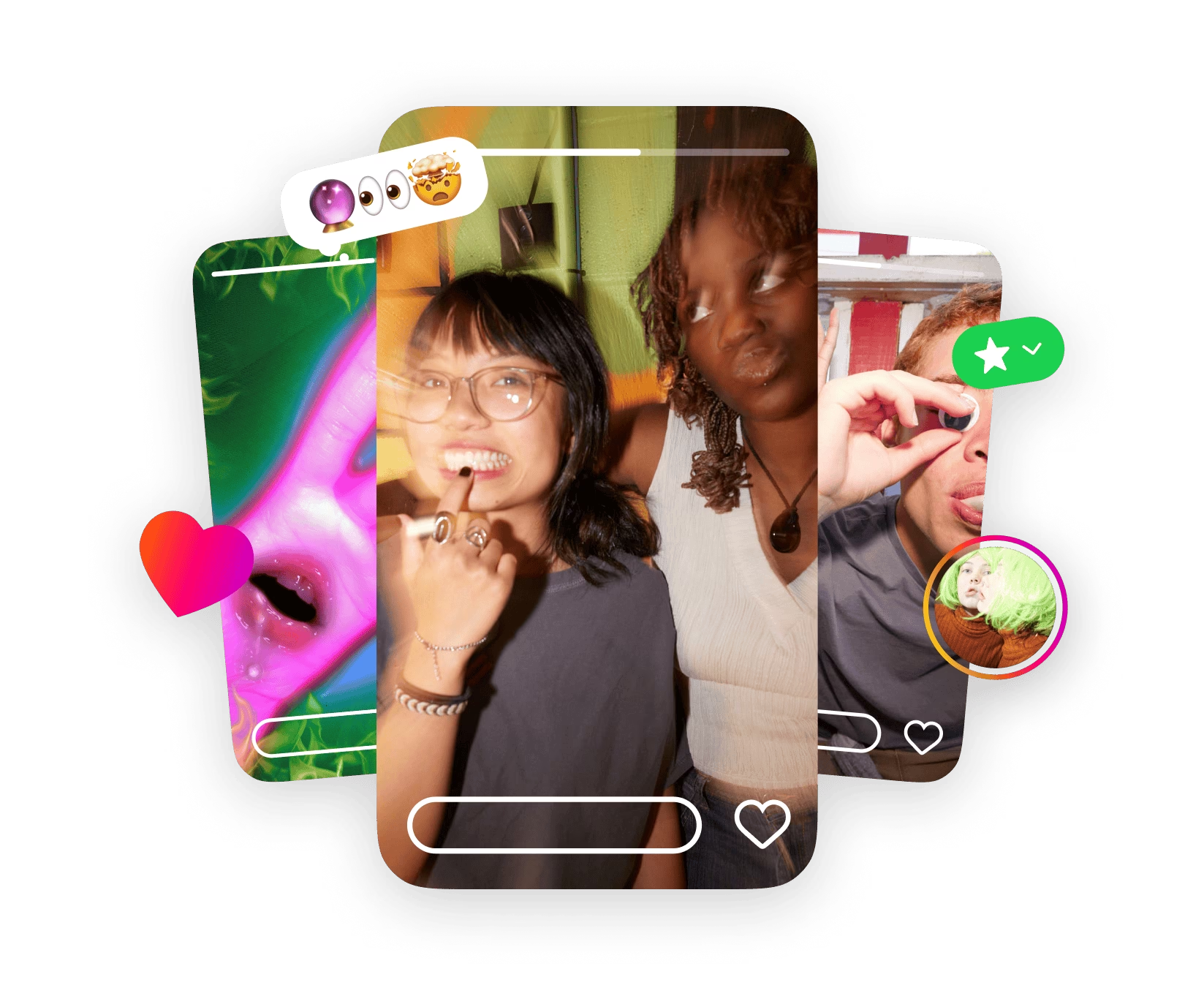
The Impossible Bind for Brands
A frustration small businesses face: you can't simply adopt the "raw aesthetic" without losing brand consistency and perceived value.
A luxury skincare brand can't suddenly post shaky iPhone videos without confusing their audience and diluting premium positioning. A professional photographer can't abandon composition principles without undermining expertise.
The algorithm rewards spontaneous authenticity, but brands are inherently constructed. This tension explains why small businesses feel particularly trapped.
Strategic Adaptation Without Losing Brand Quality
You don't have to choose between authenticity and professionalism. The successful approach combines both strategically.
1. The 70/30 Content Mix
70% Behind-the-Process Content: Show how products are made, how decisions happen, what goes into your work. This can be iPhone-filmed and casually lit. Instagram reads it as authentic because it shows process rather than just results.
Examples: Workshop footage, design decisions in real-time, sourcing materials, packaging orders, troubleshooting problems.
30% Polished Showcase Content: Professional product photography and brand photoshoots still have value for existing followers and website conversion. They reinforce brand identity. Just don't expect them to drive discovery.
2. Authentic ≠ Unprofessional
Authentic means: Showing real process, speaking naturally, admitting challenges, filming in real work environments, responding genuinely in comments.
Authentic does NOT mean: Bad lighting, poor audio quality, incomplete thoughts, inconsistent posting, abandoning brand guidelines entirely.
Behind-the-scenes content can be well-framed and professionally edited while still feeling genuine. The difference is in subject matter and approach, not production quality alone.
3. Design for Sharing, Not Just Viewing
Before posting, ask: "Would someone send this to a friend?"
High-share content: Relatable humor specific to your niche, genuinely useful tips, conversation-starters, behind-the-scenes insider knowledge.
Low-share content: Generic motivational quotes (easily AI-generated), product promotions without context, aesthetically beautiful but not useful, templated or formulaic posts.
4. SEO-Optimized Captions
Instagram now functions more like a search engine. Optimize captions for discovery.
Instead of: "Check out this new product! 🔥 Link in bio"
Write: "This ergonomic keyboard solved my wrist pain after 8-hour coding sessions. Here's what makes it different: split design reduces arm strain, adjustable tenting angle keeps wrists neutral, mechanical switches require less force. After 3 months of daily use, I've gone from constant discomfort to zero pain..."
Use the first 125 characters strategically. This preview text appears in feeds before users click "more."
5. Prioritize Comment Conversations
Respond with substance, not just "thanks!" Ask follow-up questions. Create dialogue. Instagram tracks whether your responses spark continued conversation or dead-end the thread.
Instead of: "Thanks for the support! 🙏"
Write: "Really glad this resonated! What's been your biggest challenge with this specifically?"
Aim for 3-5 exchanges per commenter on your best-performing posts.
Tracking What Actually Matters
Primary Metrics
Watch Time / Retention Rate: Track the retention curve in Instagram Insights. Where do viewers drop off? Optimize to maintain attention past 3 seconds through to completion.
Sends (Shares via DM): The single most predictive metric for reaching new audiences. Find it under "Shares" in Instagram Insights to identify your most shareable content themes.
Saves: High save rates indicate evergreen value. Track which topics or formats drive the most saves.
Comment Depth: Review your top posts and count how many comment threads extend beyond 2-3 exchanges.
Tracking these metrics manually across dozens of posts becomes time-intensive. If you're managing Instagram alongside other marketing channels, automated reporting helps identify patterns that manual exports miss, like which content types drive both organic engagement and paid conversion.
Secondary Metrics
Reach Type Distribution: Healthy accounts see 40-60% of reach coming from non-followers in 2026. If you want to benchmark your performance against competitors, Instagram's Competitive Insights tool provides basic comparisons.
Profile Visits: Consistent profile visits from content indicate discovery potential.
Metrics to Deprioritize
Follower Count: Growth is positive, but count alone doesn't predict reach or business outcomes.
Total Likes: Likes matter for existing follower engagement but don't drive discovery like shares do.
Impressions: Focus on reach (unique viewers) instead of impressions (multiple views by same person).
Frequently Asked Questions
Is my account shadowbanned if my reach dropped?
Probably not. True shadowbans are rare and result from specific policy violations. What you're experiencing is likely a "soft reach limit" caused by content that doesn't align with current algorithm priorities. Check Account Status in Settings. If there's no violation notice, you're not shadowbanned.
Do hashtags still matter in 2026?
Yes, but their function changed. Hashtags now help with content categorization, not discovery. Use 3-5 highly specific hashtags relevant to your niche rather than 30 broad ones. Focus on SEO-optimized captions with natural keyword usage instead.
How often should I post to maintain reach?
Quality matters infinitely more than quantity. Posting daily with low-quality content trains the algorithm that your posts aren't worth distributing. Post 3-4 times weekly with high-quality, strategically designed content that drives shares, saves, and genuine engagement.
Conclusion: Adapting to Instagram's Authenticity Era
The Instagram algorithm changes in early 2026 aren't arbitrary. They reflect Meta's response to the AI content crisis threatening the platform's core value proposition. When perfection becomes infinitely reproducible through AI, authenticity becomes the scarce resource worth rewarding. Meta's investment in AI isn't limited to organic content either, their GEM AI model is already improving ad performance by learning across platforms.
For small businesses, this shift feels frustrating because it invalidates years of investment in professional content creation. But this disruption also creates opportunity. Brands willing to show real process, genuine personality, and human connection now have a competitive advantage.
The successful approach doesn't abandon quality. It reframes what quality means in 2026. Instead of "polished perfection," aim for "genuine expertise." Instead of "aspirational aesthetics," show "real process." Instead of "brand-perfect," embrace "human-authentic."
The businesses thriving in this new environment show how work happens (not just finished results), speak in authentic voice (not corporate messaging), design for sharing and conversation, track meaningful metrics (sends, saves, conversation depth), stay focused on coherent topic clusters, and balance professional quality with authentic spontaneity.
Instagram's algorithm will continue evolving. But the core insight remains valuable: in a world where technology can fake anything, genuine human connection is the ultimate competitive advantage.
Your move isn't to abandon professionalism or quality. It's to use professional skills in service of authentic human connection rather than aesthetic perfection alone.



