



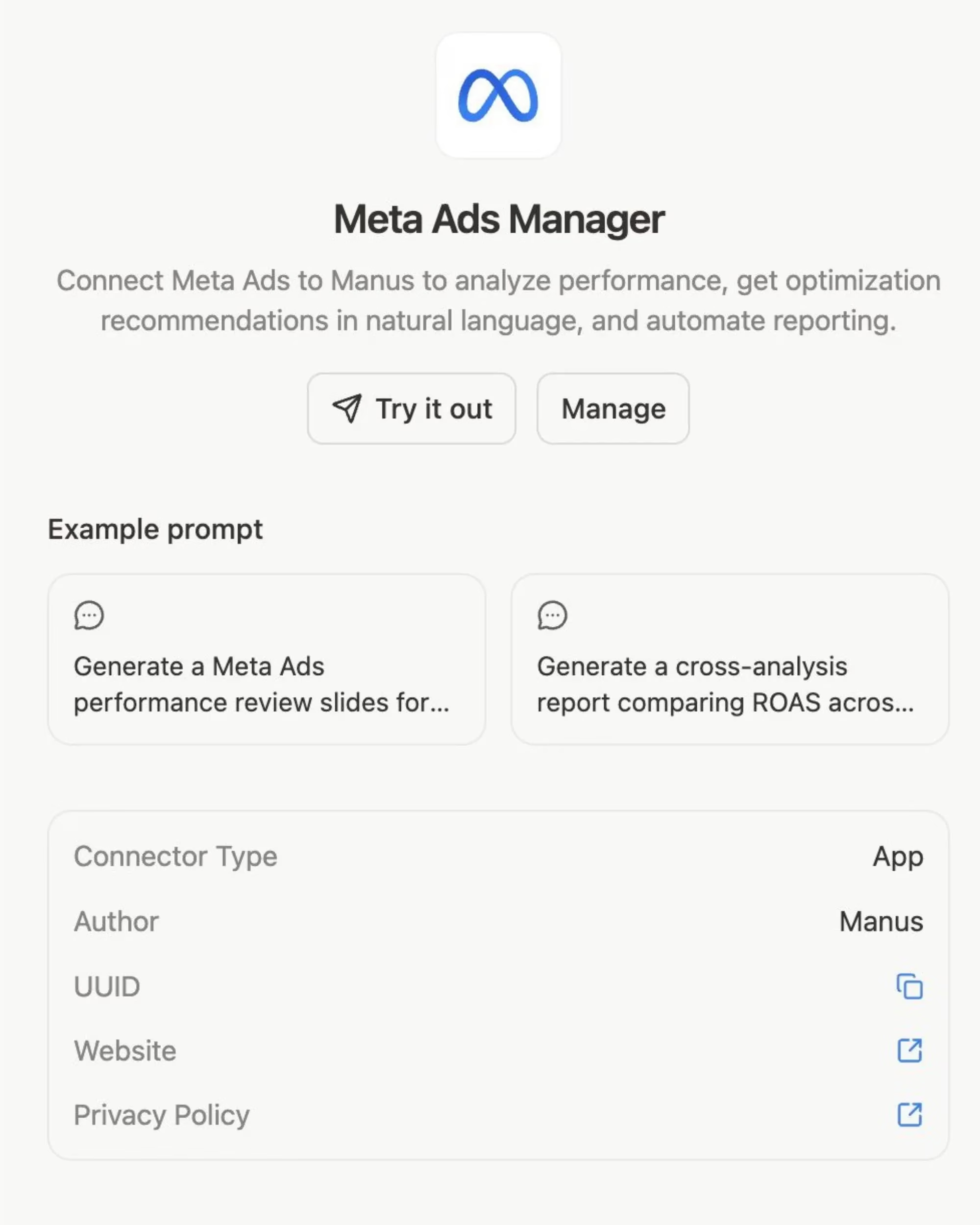
In February 2026, Meta quietly added a new AI shortcut to the Ads Manager navigation panel. It sits under "Manage," between Instant Forms and Media Library, and if you have not noticed it yet, you are not alone. The rollout has been gradual.
This is Manus AI. Meta acquired the company in December 2025 for more than $2 billion and had it live inside Ads Manager within seven weeks. By February 2026, Social Media Today reported it was rolling out globally. The speed of that deployment tells you how much pressure Meta is under to show that its AI spending, $22.1 billion in infrastructure in Q4 2025 alone according to Meta's Q4 2025 earnings, is generating something useful for advertisers.
Here is what it actually does, and where the limits are.
What Manus AI Is
Manus started as an independent Singapore-based startup. Its core idea was different from a chatbot: rather than answering questions, it was built to complete multi-step tasks end-to-end with minimal direction. You describe a goal, it plans the steps, executes them, and delivers a finished result. Before Meta acquired it, it was already handling millions of tasks for paying subscribers, including report building, research, and data analysis.
Meta embedded it directly into the Ads Manager workflow rather than launching it as a separate product. The idea was to make it part of daily operations rather than a separate tool you have to open.
To access it: go to Ads Manager, then the Tools flyout, then the Manage section, and select Manus AI. If you do not see it, try refreshing the Tools panel or check back in a few days. Meta has been activating it account by account.
What It Can Do
Inside Ads Manager, Manus handles four things well:
- Performance summaries. Ask it to review a campaign and it returns a structured analysis without you exporting a CSV or building a report. The data is already there, so the friction is low.
- Trend spotting. It can identify patterns over time: cost-per-result changes across a month, creative fatigue signals in an ad set, audience delivery shifts. It explains what it found in plain language rather than leaving you to spot it in a table.
- Creative and audience insights. Which ad is actually driving results, and at which stage of the funnel? Manus can surface that without you pulling breakdowns manually.
- Report building. One of the things it was built for as a standalone product. You describe what you need and it assembles the report.
For advertisers running most of their budget on Meta, the time saving is real. No data movement, no separate tool, no copy-paste.
Where Manus AI Falls Short
Manus only sees what Meta shows it.
That means your Google Ads data is not there. Neither is LinkedIn, TikTok, GA4, or any other channel. When Manus says a campaign is underperforming, or suggests adjusting your creative, it is working from a partial picture.
This is not a technology problem. It is structural: Manus lives inside Meta's platform and has access to Meta's data.
Most paid media budgets are spread across more than one channel. If yours is too, single-platform AI analysis will regularly miss context that changes the interpretation.
Say Manus flags your Meta cost-per-lead is up 30% week-over-week and suggests refreshing the creative. What it cannot see is whether a Google Ads campaign launched the same week, shifting higher-intent users away from Meta. Without that signal, the recommendation is incomplete, not wrong, but incomplete.
There is also the question of what Manus is optimizing toward. Jhonnattan Comas Garcerant, a paid media specialist who was among the first to comment publicly on this feature, noted that he built his own GPT connected to Meta's official API precisely to avoid the bias he perceived in Meta's native recommendations, specifically suggestions that tend toward increasing budget rather than redistributing it. Whether Manus has the same tendency is not yet documented, but it is worth watching as you use it.
For more on how Meta's AI tools affect attribution and measurement, see Meta's AI Advertising: The Attribution Black Box Marketers Face in 2026.
What Cross-Channel AI Analysis Actually Looks Like
If you want AI analysis that covers your full media mix, the data from all your channels needs to be in one place before the AI touches it. That is the gap Dataslayer fills.
Dataslayer connects to 50+ platforms, including Meta Ads, Google Ads, LinkedIn Ads, TikTok Ads, GA4, and Search Console, and makes that data available for natural-language querying through two integrations:
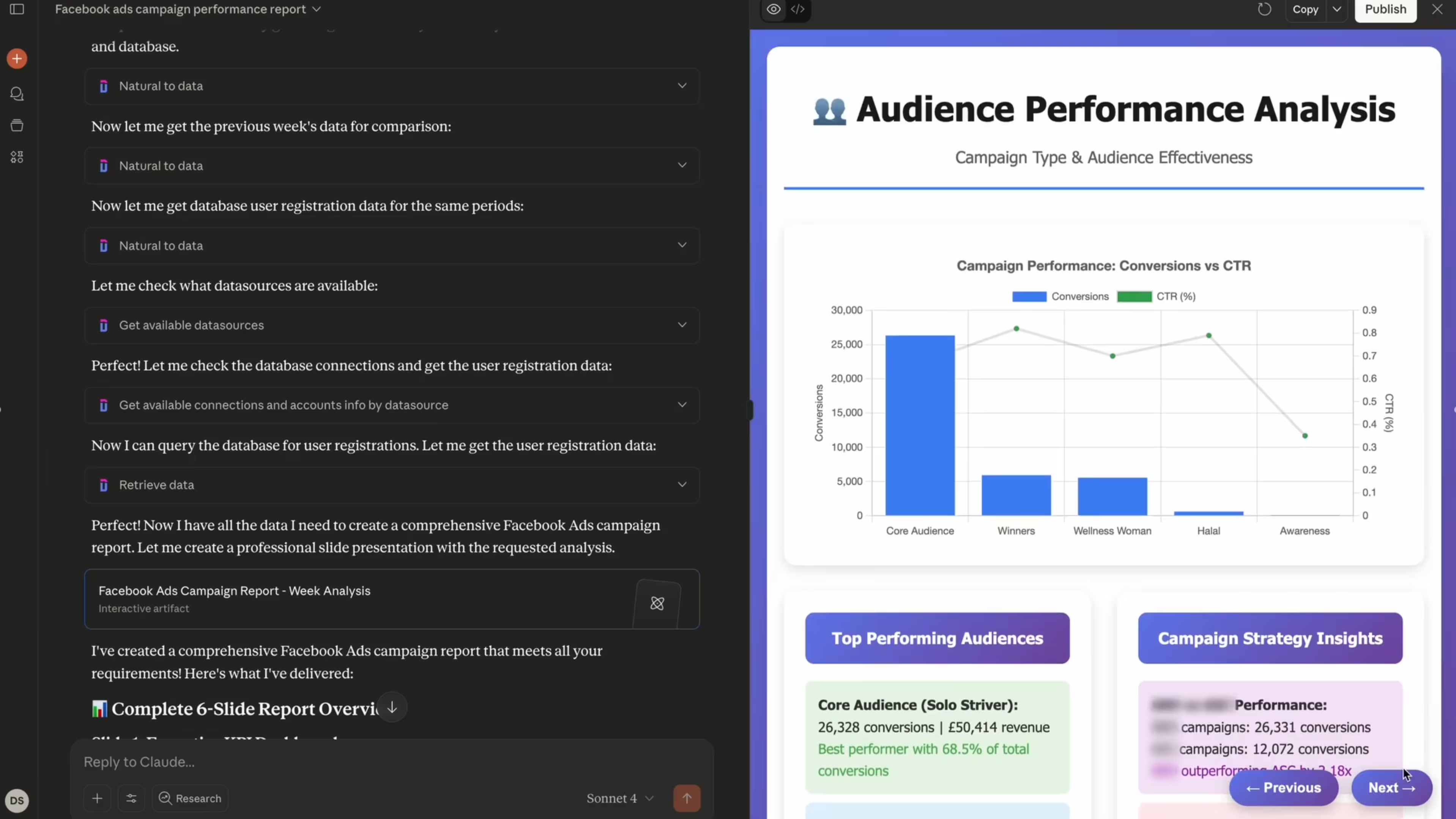
Dataslayer MCP with Claude. Once your accounts are connected, you can ask Claude questions that span all your channels:
- "Compare my Meta and Google Ads cost-per-lead for the last 30 days, broken down by week."
- "My Meta CPA increased this week. Is the same pattern showing in Google Ads?"
- "Which channel had the lowest cost-per-acquisition last month?"
Claude pulls the actual numbers from your accounts, not industry benchmarks.
Dataslayer GPT with ChatGPT. Same logic, inside ChatGPT. Connect your accounts through Dataslayer and ask cross-channel questions in the interface your team already uses:
- "Summarize performance across Meta, Google, and LinkedIn for the last two weeks."
- "Where am I getting the lowest cost-per-acquisition right now?"
- "My Meta spend went up 20% this month. Did overall CPA improve or get worse?"
ChatGPT pulls the actual numbers from your connected accounts through Dataslayer.
Neither replaces Manus AI for Meta-specific analysis. They answer the questions Manus cannot.
A Quick Comparison
The Short Version
Manus AI in Meta Ads Manager is a good tool for what it is: native, low-friction campaign analysis inside a platform you already use. For Meta-heavy advertisers, it saves real time.
The constraint is the platform boundary. An AI that reads one channel will produce recommendations based on one channel. For anyone running Meta alongside other paid media, that is a meaningful gap worth knowing about before you rely on its output.
FAQ
What is Manus AI in Meta Ads Manager?
An AI agent Meta acquired in December 2025 and integrated into Ads Manager by February 2026. It analyzes campaign performance, spots trends, and builds reports directly inside the platform.
Is it available to all advertisers?
Meta rolled it out progressively from February 2026. It is accessible through the Tools panel in Ads Manager for all advertisers, though early access was limited to selected accounts.
Can Manus AI analyze Google Ads or LinkedIn data?
No. It only reads data within Meta's platform.
How is Dataslayer MCP different?
Dataslayer connects 50+ marketing platforms to Claude, so you can run cross-channel analysis in plain language. It is not limited to a single platform's data.
Do I need technical skills to use it?
No. You connect your accounts through Dataslayer's interface and ask questions in plain language, the same way you would in any chat tool.



