


.avif)
If your TikTok views crashed this month, you're not alone. The December 2025 algorithm update changed how content gets distributed, and random viral hits are basically dead.
TikTok now works more like a search engine than a social feed. It prioritizes niche-specific content and "deep engagement" (saves, shares) over superficial metrics like likes. For anyone running TikTok campaigns, this changes everything.
The 4 Major Changes to the TikTok Algorithm in December 2025
1. Micro-Niche Push Replaces Random Distribution
TikTok used to show new videos to random test groups of a few hundred people. Now your video goes directly to a highly targeted audience based on your account's niche, keywords, and metadata.
According to Fanpage Karma's analysis, the platform introduced a "micro-niche push strategy" where initial exposure groups are matched to the most relevant communities. Post a cooking video on a finance account? The algorithm sends it to finance fans who scroll right past.
The impact: Creators focusing on specific communities see 2.5x better distribution than those chasing general viral content.
What to do:
- Stick to your lane. Don't confuse the algorithm by randomly switching topics
- If you need to pivot to a different niche, start a new account
- Audit your last 20 posts: do they all serve the same core audience?
2. Saves and Shares Now Outrank Likes
The algorithm's point system was restructured. Likes have been devalued. TikTok now prioritizes "saves" as the primary signal of valuable content.
How the 2025 update treats engagement:
- Saves = highest value (content worth revisiting)
- Shares = high value (content worth recommending)
- Comments = medium value (only if substantive)
- Likes = low value (superficial engagement)
The impact: Buffer's analysis of 1.1 million TikToks found that videos with high save rates get pushed to exponentially larger audiences.
What to do:
- Create content people need to reference later (tutorials, lists, resources)
- Example: "5 websites that feel illegal to know" + list them in the caption. People save it to remember.
- Stop begging for likes. Start building content libraries worth bookmarking.
3. TikTok Became a Full Search Engine
TikTok videos now appear in Google search results thanks to December's Core Update integration. The algorithm prioritizes videos that answer specific questions, analyzing metadata beyond just watch time.
According to Tik.Cards' breakdown of the update, TikTok is "turning into a searchable library" where the algorithm actively looks for content that solves user queries.
41% of Americans now use TikTok as a search engine, with 64% of Gen Z preferring it over Google for certain searches (Adobe survey).
The impact: Your video needs to function as both entertainment AND search result. If your content can't be tied to a keyword, it struggles to find its audience.
What to do:
- Write captions like you're targeting Google: "How to fix leaky faucet" not "I can't believe this happened 💀"
- Rename video files before uploading: "instagram-reel-dimensions-2026.mov" instead of "IMG_5920.mov". TikTok reads this.
- Speak your keywords out loud in the first 5 seconds. The algorithm transcribes and indexes this.
4. Metadata Became Critical for Distribution
The algorithm now heavily analyzes captions, hashtags, sounds, and on-screen text to categorize and recommend content. Metadata matching is now as important as watch time.
The impact: Your video description isn't optional anymore. It's a ranking factor. TikTok's speech recognition reads both your text overlay and spoken words to understand content context.
What to do:
- Use 3-5 strategic hashtags (TikTok limited posts to 5 maximum as of August 2025)
- Mix broad tags (#MarketingTips) with niche tags (#PPCStrategy)
- Add text overlays in the first 1-5 seconds with your target keyword
- Say the keyword phrase out loud during the video
What the TikTok Algorithm Actually Prioritizes Now
Based on analysis from multiple sources tracking the December update, here's the new ranking hierarchy:
Primary Signals (10 points each):
- Watch time / completion rate
- Rewatches
- Keyword-query match
Secondary Signals (8 points each):
- Saves
- Shares
- View-through rate
Tertiary Signals (6 points each):
- Comments (quality, not quantity)
- Profile visits
- Follows from video
Minimal Signals (2 points each):
- Likes
- Account age

5 Strategies That Actually Work in 2026
1. Build Content for Search Intent
Before creating content, ask: "What question does this answer?"
Example:
- "Check out this cool Google Ads hack!"
- "How to reduce Google Ads CPC by 40% in 3 steps"
The second version matches actual search queries and provides clear value people will save.
2. Front-Load Your Keywords
The first 3 seconds determine everything. Videos with higher retention in the first 3 seconds rank exponentially higher in both search and For You page.
Tactical implementation:
- Say your target keyword in the first sentence
- Display it as text overlay immediately
- Use the keyword in your caption's first line
3. Create "Saveable" Content
Design every video to be worth saving. The save button is your new success metric.
High-save content formats:
- Step-by-step tutorials
- Resource lists (tools, websites, templates)
- Before/after examples with specific numbers
- Comparison charts or decision frameworks
4. Post Consistently Within Your Niche
The algorithm rewards reliable creators who stick to their lane. Posting regularly signals trustworthiness, resulting in better initial distribution.
Buffer data shows 3-5 posts per week is the optimal frequency for most accounts. Quality still beats quantity. Skip a day rather than post weak content.
5. Track Search Traffic in Analytics
Head to your TikTok analytics → Traffic Sources. Most creators see 70-80% from "For You" and 5-15% from "Search."
Goal: Increase your search percentage over time. Videos with 20%+ traffic from search typically have stronger long-term performance and compounding views.
3 Mistakes That Kill Your Reach
Mistake #1: Using vague captions"This changed everything for me" tells the algorithm nothing. Be specific: "How I cut my Facebook Ads CPL from $12 to $4.50 in 30 days."
Mistake #2: Ignoring the 3-second hook63% of successful videos get their point across immediately (Buffer analysis). If viewers don't understand the value in 3 seconds, they scroll.
Mistake #3: Creating content outside your nicheThe micro-niche push means off-topic content gets shown to the wrong audience. Your golf video won't save your cooking account.
Quick Strategy Audit
Check your last 20 videos:
- Which ones got the most saves?
- What percentage of traffic came from search?
- What keywords did high-performers target?
Your account needs a clear theme. "Marketing tips" is too broad. "PPC campaign optimization for B2B SaaS" is specific enough.
Use TikTok Creative Center to find trending keywords in your niche with high popularity (1000+ mentions) and upward trends.
Tracking TikTok Performance Across Channels
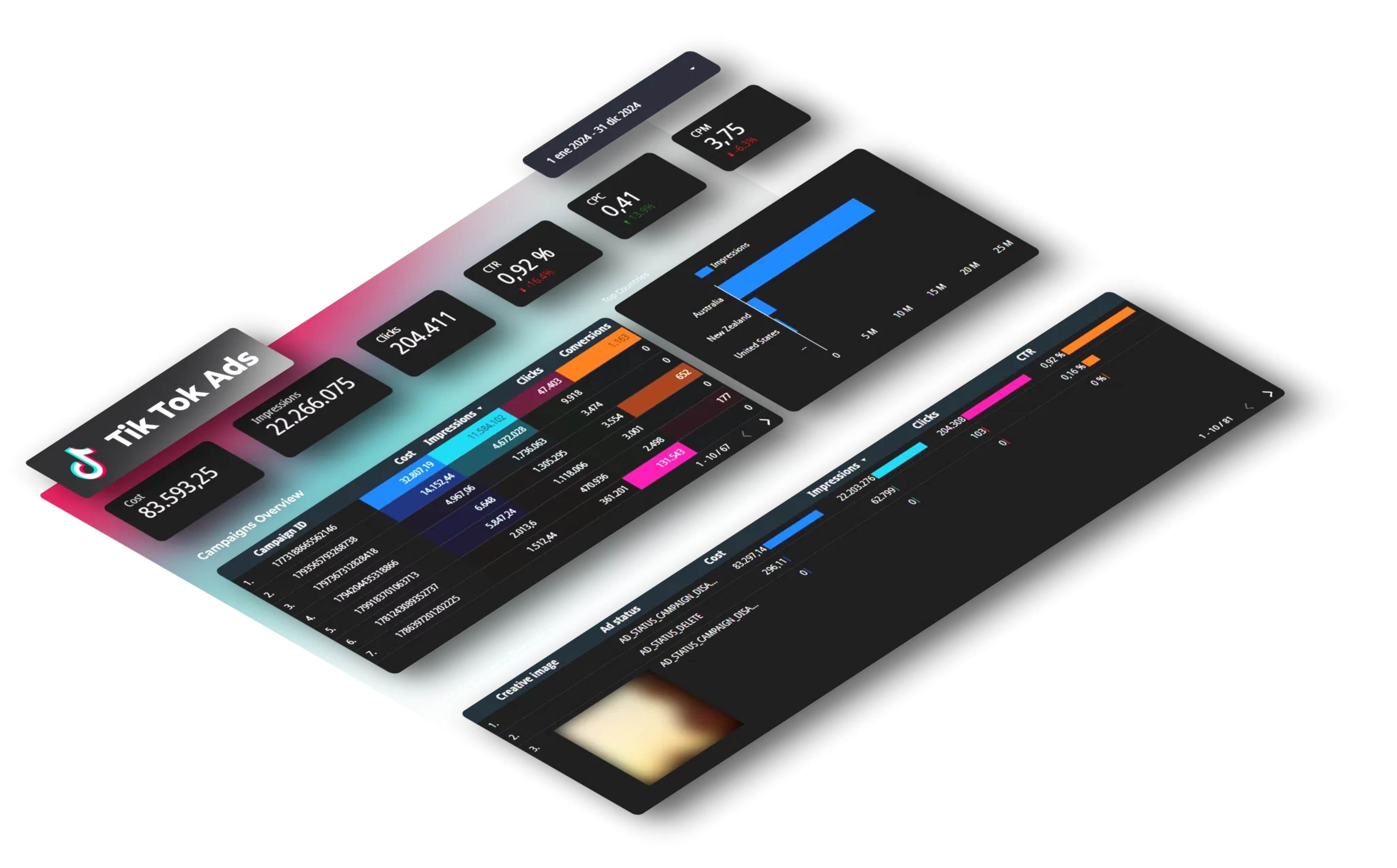
If you're running campaigns across multiple platforms, manually exporting TikTok data gets old fast. Combining TikTok metrics with Google Ads, Meta Ads, and website analytics shows which content actually drives conversions, not just engagement.
For automated reporting, tools like Dataslayer connect TikTok and 50+ other platforms directly to your dashboards with automatic updates. You can pull TikTok analytics into Google Sheets, Looker Studio, or your data warehouse for cross-platform reporting. Free 15-day trial, no credit card required.
Frequently Asked Questions
How long does it take for the algorithm to recognize my niche?
The algorithm learns your niche within the first 15-20 videos. If you've been inconsistent, create 10 highly focused videos in your target niche to retrain it.
Do I need to use trending sounds to get reach?
No. Trending sounds help discovery, but only if they match your niche. A relevant non-trending sound outperforms an irrelevant viral one.
How many hashtags should I use?
3-5 hashtags maximum (TikTok's official limit). Mix one broad hashtag, 2-3 niche hashtags, and optionally one trending hashtag if relevant.
Can I still go viral without a large following?
Yes, but "viral" looks different now. Instead of random massive spikes, expect steady growth within your micro-niche that compounds over time.
What's the best time to post on TikTok in 2026?
It depends on your audience. Sunday 8 PM, Tuesday 4 PM, and Wednesday 5 PM show high engagement according to recent data from 1 million+ videos, but use TikTok Analytics to find when your specific audience is active.
Key Takeaways
The December 2025 algorithm update changed four things:
- Micro-niche targeting replaced random distribution. Content goes to specific interest groups immediately
- Saves and shares are the new primary ranking signals, with likes devalued
- Search functionality became core. TikTok now indexes content like a search engine
- Metadata matters critically. Captions, hashtags, and spoken keywords directly impact distribution
The brands winning on TikTok in 2026 treat it like a search engine first and a social platform second. They optimize for question-based queries, create content worth saving, and build authority in specific micro-niches.
The algorithm isn't unpredictable, it's just more sophisticated. And if you understand basic SEO principles, you can adapt your content strategy accordingly.



