


On November 24, 2025, OpenAI launched ChatGPT Shopping Research, transforming how 700 million weekly ChatGPT users discover products. The feature processes 50 million shopping-related queries daily (roughly 2% of ChatGPT's 2.5 billion daily prompts), making it a significant new discovery channel that operates completely differently from traditional search. Unlike Google, where you optimize for keywords and backlinks, ChatGPT Shopping prioritizes structured product data, third-party reviews, and conversational content, creating both opportunities and challenges for marketers.
What ChatGPT Shopping Actually Does
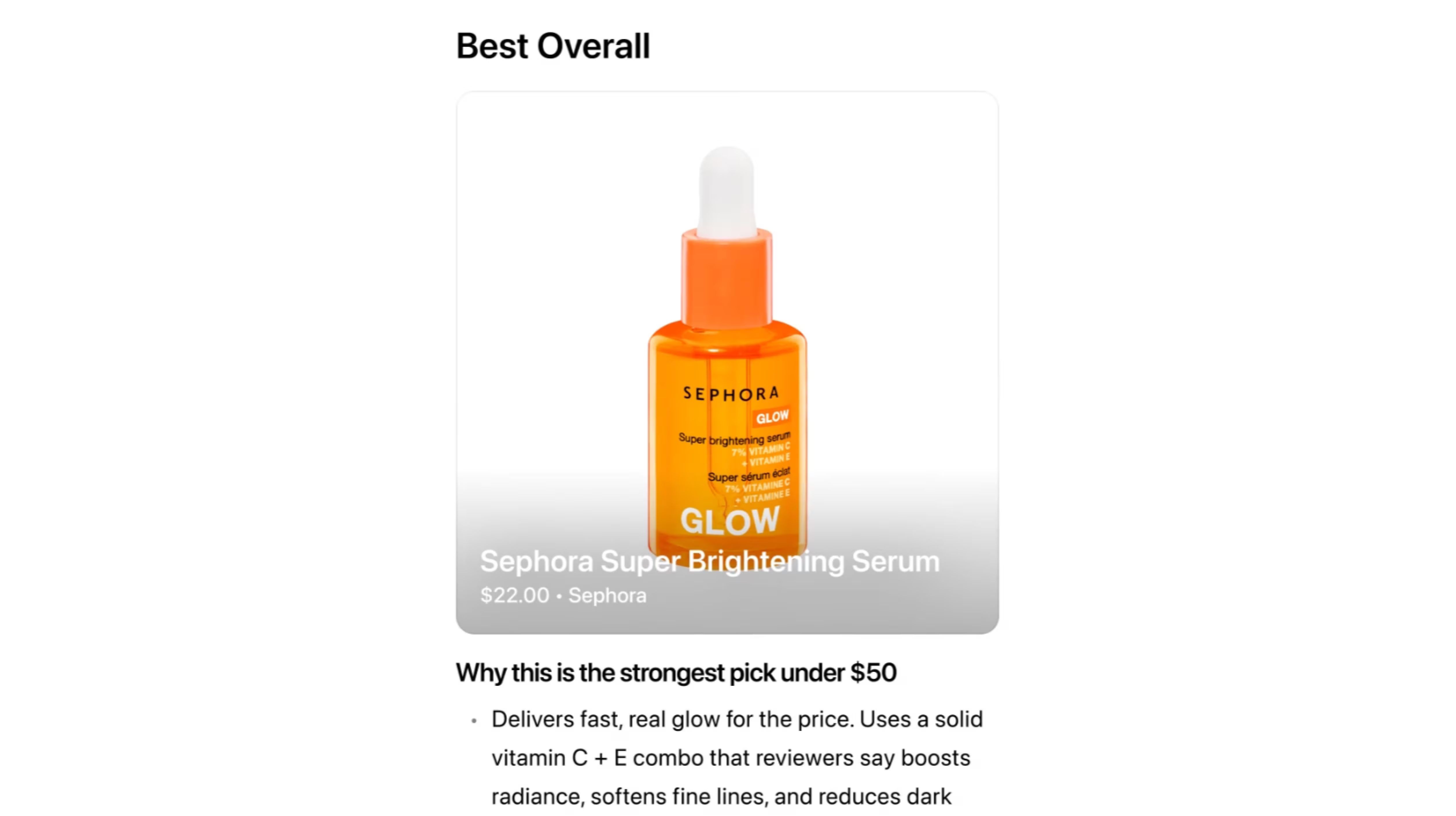
When someone asks "Find the quietest cordless vacuum for a small apartment," ChatGPT doesn't return 10 blue links. It asks clarifying questions about budget, floor type, and storage space. Then it spends 3-5 minutes researching before delivering a personalized buyer's guide with specific product recommendations.
The system uses GPT-5 mini trained specifically for shopping tasks. OpenAI reports it achieves 64% accuracy in matching products to user requirements, compared to 37% for standard ChatGPT queries, a 73% improvement.
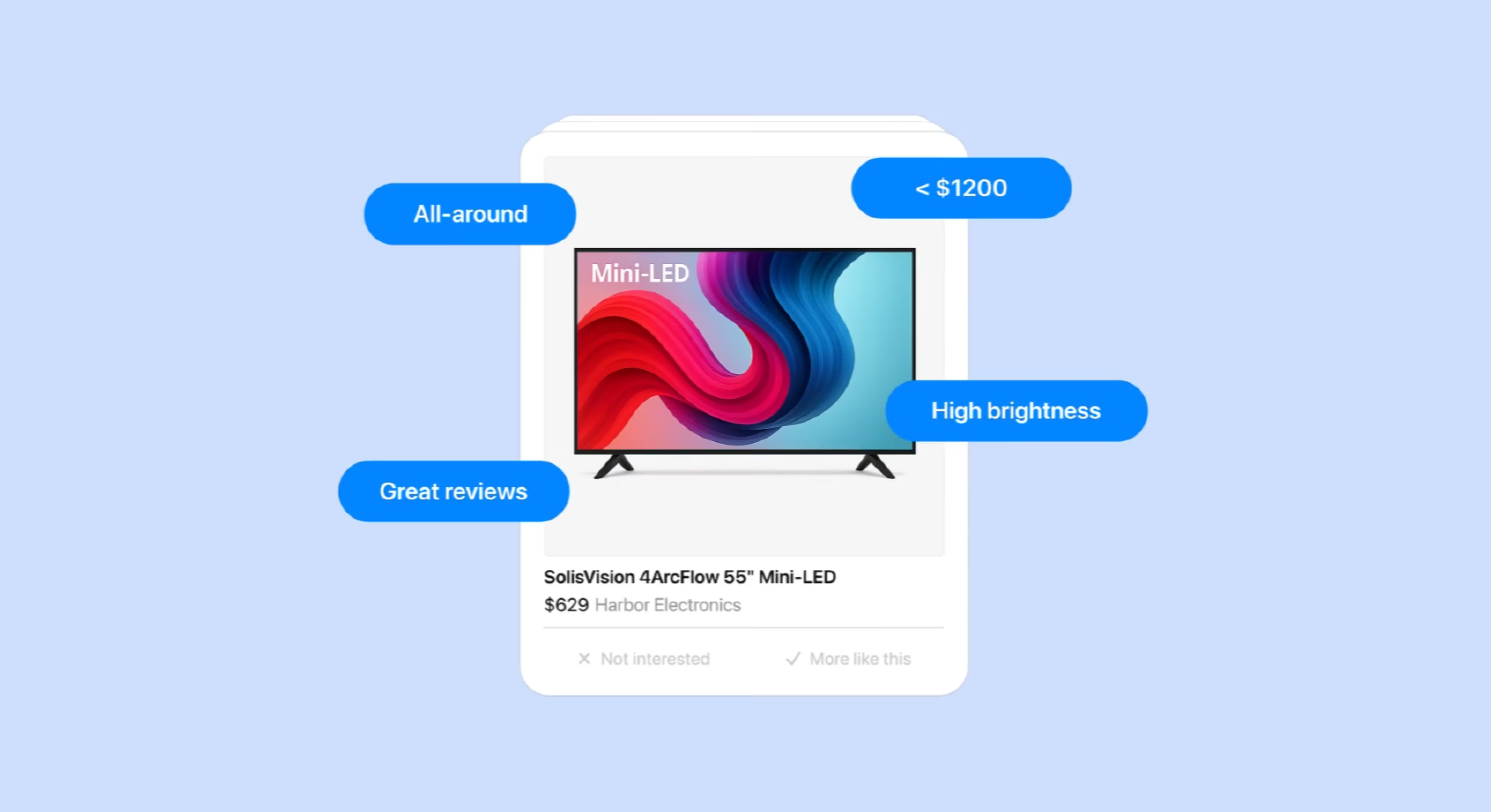
The difference from Google is stark. With traditional search, you open 8 tabs comparing specs and still aren't sure which product fits your needs. ChatGPT Shopping asks questions, narrows options based on your actual constraints, and explains tradeoffs between the 4-6 products it recommends. You can refine results by marking items "More like this" or "Not interested."
The feature rolled out to all logged-in users (Free, Go, Plus, and Pro plans) on web and mobile, with nearly unlimited usage through the holiday season.
Which Categories Work Best
OpenAI specifically mentions ChatGPT Shopping "performs especially well in detail-heavy categories like electronics, beauty, home and garden, kitchen and appliances, and sports and outdoor."
This isn't random. These categories share characteristics that play to AI's strengths: lots of comparable specifications, clear differentiation between products, abundant third-party reviews, and purchase decisions that benefit from research.
Someone buying a vacuum needs to compare suction power, noise levels, weight, battery life, and filtration. ChatGPT can process all these variables against user constraints ("I have a small apartment and a dog") faster than opening 15 browser tabs.
Fashion and highly subjective categories perform worse. ChatGPT struggles with "find me a dress for a wedding" because style preferences are personal and visual. The system works best when products have objective, comparable attributes.
The Numbers That Matter
50 million daily shopping queries means this isn't a curiosity, it's a real channel. And the traffic patterns prove it.
According to Similarweb data, one in five of Walmart's referral clicks in August came from ChatGPT, up 15% from July. Target, Etsy, and eBay are seeing similar growth. This is measurable, trackable traffic driving actual purchases.
The accuracy jump from 37% to 64% in matching products to user needs explains why adoption is accelerating. The 3-5 minute research time shows ChatGPT Shopping targets considered purchases, not quick price checks, exactly where marketing teams can add real value.
The Amazon Blackout Changes Everything
Amazon blocked all OpenAI crawlers from accessing its site: ChatGPT-User, OAI-SearchBot, GPTBot, all of them. 600 million Amazon product listings are invisible to ChatGPT Shopping.
For brands selling exclusively on Amazon, this is a problem. For everyone else, it's opportunity. Amazon generates $56 billion annually from advertising built on shoppers browsing Amazon.com. They're not about to let ChatGPT intercept that traffic.
E-commerce analyst Juozas Kaziukėnas spotted the robots.txt changes first: "Amazon doesn't want to just be the back end of the internet. They want to be the front door."
While Amazon referral traffic from ChatGPT dropped 18% month-over-month to sub-3%, ChatGPT is sending 20% of Walmart's referrals. Target, Best Buy, Etsy, Shopify merchants, they're all getting traffic Amazon isn't.
What Shows Up (And What Doesn't)
Early testing reveals clear patterns:
Products appearing consistently have:
- Complete data: brand, model, variant, GTIN/MPN identifiers
- Real-time pricing and stock sync
- Server-rendered JSON-LD schema (not JavaScript-added)
- Benefit-focused descriptions ("perfect for small apartments" not just specs)
- Reviews from multiple third-party sources
- Reddit and forum discussions
Common invisibility causes:
- Variant confusion (asking for "black sneakers" returns navy)
- Out-of-date pricing
- JavaScript-only schema that loads late
- Spec-only descriptions without context
- No external mentions
The structured data requirement represents a fundamental shift. Your SEO team can't just optimize blog posts anymore, they need to ensure every product page has complete, accurate schema. Your product team can't just write decent descriptions, they need to understand how AI systems parse that information.
Reviews Matter More Than Your Product Page
ChatGPT Shopping explicitly prioritizes "high-quality, publicly available" sources like review sites and Reddit. What people say about your product on Reddit can matter more than your own product page copy.
The system analyzes sentiment, review volume, and off-site mentions to build product labels like "durable," "quiet," and "budget-friendly." A product with 500 Amazon reviews (inaccessible to ChatGPT) and 2 Reddit mentions performs worse than one with 50 verified reviews across your site, Reddit, and independent platforms.
This means actively monitoring Reddit discussions, getting products reviewed on independent platforms, and building proper schema for on-site reviews. Brand mentions across forums suddenly became marketing KPIs.
A Real-World Example: How Schema Makes the Difference
Testing by Search Engine Land found two identical coffee makers from the same manufacturer. One had complete Product schema with GTIN, real-time pricing, AggregateRating with 156 reviews, and benefit-focused copy ("Quiet enough for morning brewing without waking family"). The other had basic schema, no identifiers, and spec-focused copy.
The first appeared in 8 out of 10 test queries. The second appeared twice.
Same product. Same brand. Different data structure. The lesson: technical optimization now directly impacts discovery. Your product team and dev team need to work together on this, not just marketing.
Instant Checkout: Where This Is Headed
ChatGPT Shopping currently links to retailer sites for purchases. But OpenAI is rolling out Instant Checkout, U.S. users can now buy directly from Etsy sellers within ChatGPT, with over 1 million Shopify merchants coming soon (Glossier, SKIMS, Spanx, Vuori).
The process: find product → tap "Buy" → confirm shipping/payment → done.
Merchants pay a small transaction fee. Results remain organic and unsponsored, Instant Checkout is just one ranking factor alongside price, inventory, and quality. But this matters for attribution. Right now you track ChatGPT referrals via utm_source=chatgpt.com. With Instant Checkout, transactions happen entirely within ChatGPT's interface. You'll need new tracking methods.
The Conversion Reality Check
A University of Hamburg working paper analyzed 12 months of data from 973 e-commerce sites generating $20 billion annually. ChatGPT traffic converts far worse than Google Search, email, and affiliate links initially.
But conversion rates improved steadily month over month. While average order value declined slightly, total revenue per session rose. One brand executive told researchers: "The clicks we get are highly qualified because people have all their questions answered through ChatGPT, then being sent out close to a purchase decision."
This is classic early-stage channel behavior. Email marketing had terrible conversion in 1995. Facebook ads performed poorly in 2008. New channels take time as users and marketers learn how they work.
The qualification point matters. Someone clicking from Google Search might still be in research mode, comparing 10 different options. Someone clicking from ChatGPT already got personalized recommendations with their questions answered. They're arriving pre-qualified but need to verify ChatGPT's recommendation matches reality, checking actual product pages, reading full specs, confirming the merchant is legitimate.
As users become more comfortable trusting AI recommendations (and as merchants optimize their ChatGPT presence), that verification step gets faster. The paper's month-over-month improvement suggests exactly this pattern.
What Different Marketing Roles Should Do
Content Strategists: Stop optimizing "best [product] 2025" listicles. ChatGPT doesn't care. Write benefit-focused product descriptions answering "who is this for?" Create FAQ schema for common questions. Build use-case content like "How to choose a laptop for video editing." Get featured in Reddit discussions and review platforms.
SEO Specialists: Your job is evolving from keyword optimization to data optimization. Audit product schema across your catalog. Ensure JSON-LD is server-rendered, not JavaScript-injected. Add GTIN/MPN identifiers everywhere possible. Verify robots.txt allows OAI-SearchBot. Monitor ChatGPT Shopping results for your products. Track utm_source=chatgpt.com referrals.
PPC Specialists: ChatGPT Shopping shows organic results, for now. But OpenAI needs $2 trillion annually by 2030 just for infrastructure, with projected revenue of only $1.2 trillion. That $800 billion gap will likely come from advertising. Build complete product feeds now. Test creative approaches to product discovery. Monitor competitive presence. Set aside budget for when sponsored placements launch.
Influencer Marketing Teams: Third-party mentions just became more valuable. ChatGPT prioritizes Reddit, review platforms, and independent publishers over brand content. Focus on getting products reviewed by trusted voices. Encourage authentic Reddit discussions (never astroturfing). Build relationships with niche review platforms. Track brand mentions across forums, not just social.
Competitive Intelligence Just Got Easier
Unlike Google where you need expensive SEO tools to understand competitor rankings, ChatGPT Shopping visibility is testable in real-time. Ask "Best wireless earbuds under $100" and see who appears. Ask 10 variations and map competitive presence.
This gives you immediate feedback on where competitors have better optimization, which review platforms matter most in your category, and what product attributes ChatGPT prioritizes. Run these tests weekly to track how competitive landscape shifts.
Smaller brands can compete against established players more effectively here than in traditional search. If you have better structured data, more Reddit presence, and clearer benefit-focused content, you can outrank brands with bigger SEO budgets. The playing field resets.
Five Steps to Start This Week
1. Allow the Crawlers (5 minutes)
Check your robots.txt file. Make sure you're not blocking OAI-SearchBot:
User-agent: OAI-SearchBot
Allow: /
2. Audit Your Top 10 Products (2-3 hours)
For each best-selling product, verify:
- JSON-LD Product schema present and server-rendered?
- GTIN/MPN identifiers included?
- Pricing and availability synced real-time?
- Recent reviews with AggregateRating schema?
- Description explains benefits, not just specs?
Fix what's missing, starting with highest-revenue products.
3. Test Your Visibility (30 minutes)
Open ChatGPT. Ask questions your customers would ask:
- "Best [your product category] for [specific use case]"
- "I need a [your product] that [specific constraint]"
Do your products appear? If not, why? This tells you what to fix first.
4. Sign Up for Product Feeds (5 minutes)
Fill out the OpenAI Product Discovery interest form. Early access could provide competitive advantage. (Note: OpenAI has consolidated the merchant registration process at chatgpt.com/merchants following the official launch of Instant Checkout).
5. Track Your Traffic (ongoing)
Set up Google Analytics segment for utm_source=chatgpt.com. Monitor traffic volume, conversion rate vs other channels, average order value, and which product categories get the most referrals.
Common Questions About ChatGPT Shopping
How is this different from Google Shopping?
Google Shopping shows a grid of products with prices, ranked partly by ad spend. ChatGPT Shopping asks clarifying questions, researches your specific needs, and creates a personalized buyer's guide explaining tradeoffs. It's consultative rather than transactional, focused on helping you decide, not just showing prices.
Will ChatGPT Shopping kill traditional SEO?
No, but it changes what matters. People still Google product names and specs. But product discovery is shifting to conversational AI for many users. Your SEO strategy needs structured product data, third-party reviews, and conversational content alongside traditional optimization. It's a new channel, not a replacement.
Why isn't my product showing up?
Five common issues: (1) robots.txt blocks OAI-SearchBot, (2) missing structured data or identifiers, (3) out-of-date pricing/availability, (4) insufficient third-party reviews, or (5) spec-focused descriptions without benefits. Audit your best sellers against these criteria first.
Does ChatGPT favor certain retailers?
Not currently. OpenAI states results are organic and unsponsored, ranked by relevance. When multiple merchants sell the same product, factors include inventory, price, quality, and Instant Checkout availability, all aimed at user experience. But given OpenAI processes 50 million free shopping queries daily, sponsored placements are likely coming.
How do I measure ROI from this traffic?
Track referrals using utm_source=chatgpt.com in your analytics. Compare conversion rates, average order value, and lifetime value to other channels. Early data shows lower initial conversion than Google Search but steady monthly improvement. Also track qualitative signals, ChatGPT users often ask fewer questions because their research is already done.
Should I abandon Amazon if ChatGPT can't access it?
Depends on your business, but multi-channel presence is more valuable now. Amazon is 40% of U.S. e-commerce but invisible to ChatGPT's 50 million daily shopping queries. If your customers are early AI adopters, strong presence on Shopify, Walmart, Target, or your own site can drive meaningful incremental revenue alongside Amazon.
What Happens Next
ChatGPT Shopping launched a week ago. The landscape changes daily as brands test and figure out what works.
- Near term: Instant Checkout expands to more merchants and regions. Multi-item carts roll out. Tracking improves. Results become more consistent.
- Medium term: Sponsored placements or advertising likely launches. Variant handling and pricing accuracy improve. More payment processors integrate. Google, Amazon, and other platforms respond.
- Long term: ChatGPT Shopping becomes standard for considered purchases. Product optimization for AI becomes standard marketing practice. Attribution models adapt. A few dominant AI shopping platforms emerge.
The brands winning now are treating this seriously while competition is still confused. They're auditing data, fixing schema, building review presence, and tracking results.
You don't need a massive budget. You need clean data, genuine customer voices, and content that helps rather than sells. The playing field is more level than it's been in years, no backlink authority requirements, no mandatory ad spend, just accurate information and authentic reputation.
Start by allowing the crawler, fixing your structured data, and testing your visibility. Then build based on what works for your specific products and customers.
The shift from search-based to trust-based discovery is happening whether you're ready or not. The question is whether you'll shape how your products appear in these conversations or watch competitors define your category without you.



