


Google quietly reshaped search in December. AI Overviews dropped from 25% of queries in July to under 16% by November, according to Semrush's analysis of 10 million keywords. Meanwhile, ads in AI Overviews exploded from 3% to 40%.
On December 19, Google expanded AI Overview ads to 11 countries without announcing it. If your traffic dropped despite stable rankings, this is why.
The December Numbers
Three things happened in December that changed search permanently:
AI Overview Contraction
- Down to 16% of queries from July's 25% peak (Search Engine Land)
- December 11 core update hit 59% of sites with ranking drops
- Some publishers lost 70-85% of traffic during peak revenue season
Ad Explosion
- 40% of AI Overviews now show ads, up from 3% in January
- Silent rollout to 11 new countries on December 19
- 25% of AI Overview SERPs display ads at the bottom
Click-Through Collapse
- 8% CTR when AI Overviews appear vs. 15% without them
- 34.5% drop in clicks for top-ranking pages
- Pew Research found users who saw AI summaries clicked traditional results half as often
This isn't temporary. Google is optimizing for revenue while publishers absorb the traffic hit.
Which Industries Got Hit Hardest
AI Overviews don't affect all sectors equally. Semrush's study found:
If you work in B2B tech, insurance (17% → 63%), or entertainment (2% → 37%), you're in the highest-impact zone.
Shopping queries actually saw AI Overviews decrease. Only 4% now trigger them versus 29% at launch. Product searches remain relatively safe.
The Silent International Ad Rollout
Google's December 19 documentation update revealed something significant: ads in AI Overviews are now live in 12 countries total, targeting English-speaking markets.
What makes this noteworthy:
- No press release or announcement
- First detection of ads in AI Overviews happened November 24 via Adthena
- Only 0.052% of monitored SERPs showed these ads initially
- Expansion occurred during Q4, when seasonal ad rates peak
Google excluded sensitive verticals from AI Overview ads: finance, healthcare, gambling, alcohol, adult content, and politics. For everything else, ads are rolling out aggressively.
Real Publisher Traffic Data
Similarweb tracked the top 500 publishers and found:
- 27% year-over-year traffic decline since February 2024
- 64 million visits lost per month
- AI chatbot referrals only increased 5.5 million/month, not nearly enough to compensate
Specific examples:
- New York Times: -4.81%
- The Guardian: -3.28%
- CNBC: -20.92%
A lifestyle publisher shared data with the UK's PPA showing a popular "how to" query maintained its page one ranking, but CTR dropped from 2.75% to 1.71% despite 7% higher search visibility.
The biggest problem? Google doesn't separate AI Overview clicks in Analytics or Search Console. You can't measure the impact accurately, making it nearly impossible to report true performance to stakeholders.
Why Google Pulled Back AI Overviews
The 25% to 16% contraction isn't a retreat, it's optimization. Google tested aggressively in July, collected user behavior data, then scaled back while ramping up ads.
As AI Overview presence decreased, ad integration increased 13x (from 3% to 40%). The timing tells you everything about Google's priorities.
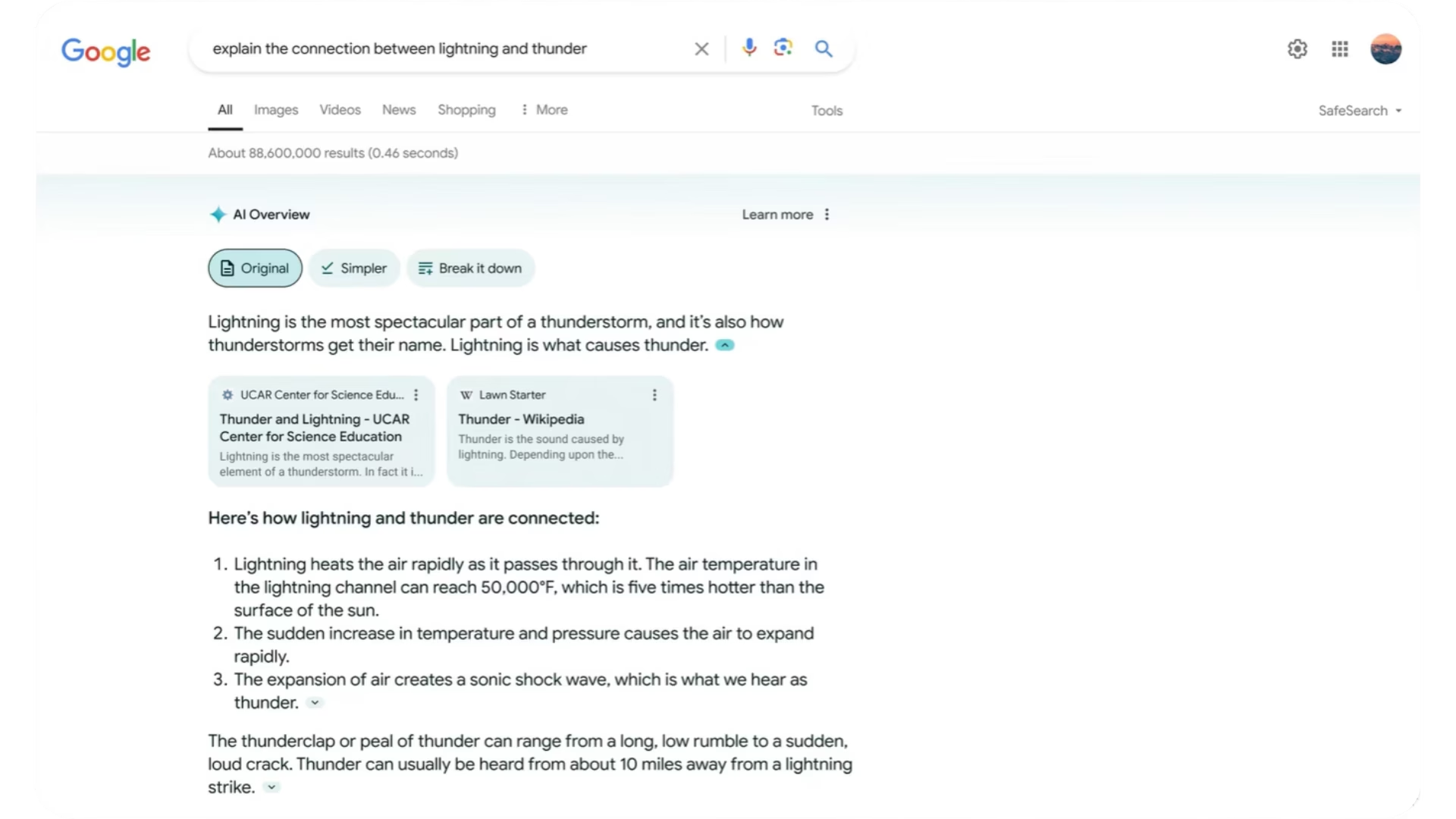
Which Queries Trigger AI Overviews
Understanding trigger patterns helps you decide where to invest content effort:
High Probability (85%+):
- Long-tail informational queries ("what is," "how to," "when," "where")
- Low CPC, low competition terms
- 80% of AI Overview keywords fall in 0-40% difficulty range
- Average volume: 100 or fewer monthly searches
Low Probability:
- Shopping and product comparisons
- Real estate and local searches
- Time-sensitive content
- Sports queries
- Branded searches
Key insight from Onely's ecommerce analysis: 80% of sources cited don't rank organically for those queries. Even holding #1-3 gives you only 8% chance of citation.
Practical Strategies That Work in 2026
1. Audit Your Keyword Portfolio
Check your top 50 keywords manually for AI Overview presence. Split them into two groups:
- AI Overview present: Consider if traffic potential justifies the effort
- No AI Overview: Prioritize these for content investment
Track monthly, AI Overview presence is volatile. What doesn't show today might appear next month.
2. Target Keywords AI Overviews Avoid
Counterintuitively, navigational queries (brand searches) now trigger AI Overviews 10% of the time, up from <1% in January. But certain query types remain safe:
Focus on:
- Comparison terms ("X vs Y," "best [product] for [specific use case]")
- Local searches with geographic specificity
- Recent events and time-sensitive content
- Experience-based queries that require firsthand knowledge
Avoid:
- "What is" definitions (88% AI Overview presence)
- Basic "how to" tutorials
- Generic FAQ-only pages
Example: "best project management software for remote design teams" performs better than "project management software features."
3. Structure Content for AI Citations
If AI Overviews dominate your category, getting cited matters. WordStream's analysis found 78% use list formatting. Content that gets pulled typically has:
- Bullet points and numbered lists
- FAQ sections with direct question-answer pairs
- Schema markup for structured data
- Recent publication (85% of citations from last 2 years)
- 6-14 sources cited per response
Real example: That lifestyle publisher's "how to" article? They restructured it with step-by-step lists and added FAQ schema. CTR stabilized within 6 weeks.
4. Track Different Metrics
Stop judging success by organic traffic alone. New KPIs for 2026:
Primary:
- Branded search volume growth
- Time on site and pages per session
- Email signups and newsletter subscribers
- Direct traffic percentage
Secondary:
- Position 1-3 rankings on non-AI Overview queries
- Traffic from long-tail terms under 40% keyword difficulty
- Conversion rate by traffic source
One director we talked to said: "We shifted from 'how to' content to comparison guides and case studies. Traffic is down 15% but conversions are up 30%."
5. Build Owned Audiences
The most resilient sites in December's update had strong direct relationships:
- Email lists that Google can't summarize
- Communities (Slack, Discord, LinkedIn groups)
- Newsletter-first strategies with website as secondary
- Gated content requiring signup
As one publisher exec put it: "We went from 60% Google traffic in 2021 to 35% today. Building direct audience relationships is the only moat left."
PPC Strategy Changes for 2026
For paid search specialists, the AI Overview ad expansion is a double-edged sword.
What qualifies for AI Overview ads:
- Search campaigns using Google's AI Max features
- Performance Max campaigns
- Broad match with AI-powered bidding
The problem:
- Can't bid specifically for AI Overview placements
- No separate reporting for AI Overview ad performance
- Paid CTR on informational keywords with AI Overviews collapsed from 18-19% (June 2024) to single digits by September 2025
Smart move: Reallocate budget away from informational keywords toward mid-funnel and bottom-funnel terms. Shopping, comparison, and "buy now" intent queries show AI Overviews less than 10% of the time.
Content Types That Survived December
Siege Media's analysis showed case studies and pricing pages actually increased traffic while top-funnel content crashed.
High-ROI content in 2026:
- Case studies with specific metrics
- Product comparison guides (A vs B)
- Experience-based stories with firsthand insights
- Opinion pieces and analysis
- Local content with geographic specificity
Low-ROI content:
- "What is" definitions
- Basic tutorials without unique angle
- Generic top 10 lists
- FAQ-only pages
One content strategist told us: "We killed 40% of our 'what is' articles and reallocated budget to case studies. Traffic is down 15% but conversions are up 30%."
For reporting these changes, check out our guide on marketing reports in 2026. It covers how to structure data when traditional metrics don't tell the full story.
What's Coming in 2026
Based on Google's earnings calls and industry reports:
Q1 2026:
- Gemini chatbot advertising launch (despite public denials)
- AI Mode expansion beyond premium subscribers
- More countries added to AI Overview ads
Throughout 2026:
- Search behavior shifts toward AI Mode for complex queries
- Traditional organic results pushed further down
- Continued publisher litigation
One Google rep told ad clients in December: "We're bringing ads to Gemini in 2026." The official denial suggests quiet testing.
Bottom Line
December 2025 data proves Google is contracting AI Overviews while expanding monetization. The 25% to 16% decrease isn't a retreat, it's optimization.
For marketing professionals heading into 2026:
- Your organic traffic isn't recovering to pre-AI Overview levels
- Paid strategies need adaptation to new AI-powered ad placements
- Content strategy must focus on what AI can't replicate
- Measurement frameworks need evolution beyond traditional SEO metrics
The marketers who adapted fastest focused on owned audiences, differentiated content, and diversified traffic sources.
Start there. This isn't temporary, it's the new normal for 2026.
Frequently Asked Questions
How do I know if AI Overviews are affecting my traffic?
Check your top keywords manually in Google. If AI Overviews appear consistently, compare year-over-year traffic for those specific terms. You should see 30-40% CTR declines even with stable rankings.
Can I optimize to get cited in AI Overviews?
Yes. Use structured formats (lists, tables, FAQ schema), keep content updated (85% of citations from last 2 years), and maintain high E-E-A-T signals. But citation doesn't guarantee traffic recovery.
Should I stop creating informational content?
Not entirely. Focus on content with unique expertise, firsthand experience, or proprietary data that AI can't replicate. Avoid generic "what is" articles that get fully answered in AI Overviews.
How long until traffic stabilizes in 2026?
Based on publisher reports, 2-4 months after implementing changes. However, "stable" likely means 15-30% below previous levels. Full recovery is unlikely for most informational content.
What about paid search strategy?
If running campaigns on informational keywords where AI Overviews appear frequently, reallocate budget to mid-funnel and transactional terms. AI Overview ads require automated campaigns (Performance Max, AI Max for Search) to qualify.
How do I report this to leadership?
Create keyword cohorts: "AI Overview Present" vs "Absent." Show CTR and traffic trends for each separately. This demonstrates the external factor rather than SEO performance issues. Include competitor data showing similar industry patterns.



