



Your Meta ads probably felt different in 2025. Not slightly different, completely different.
Jon Loomer documented 83 distinct changes to Meta's advertising platform this year. That's one major update every 4.4 days.
If you manage Facebook or Instagram ads, these weren't subtle tweaks. They fundamentally changed how campaigns work, what "optimization" means, and which strategies actually deliver results in 2026.
Meta Andromeda: The Change Behind Everything Else
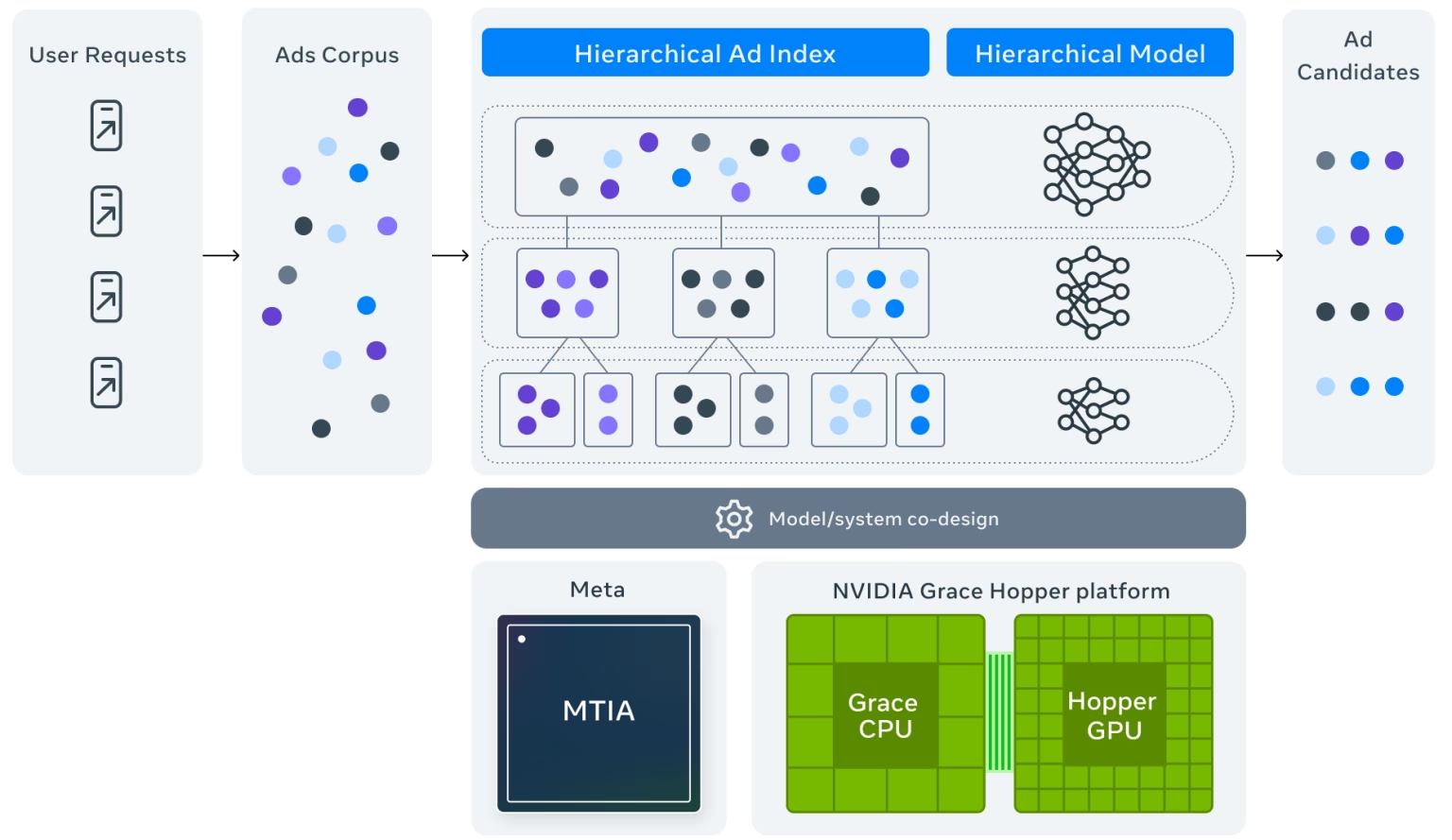
Andromeda is Meta's new ad retrieval system, the engine that decides which ads get considered before ranking even happens.
The old system couldn't handle scale. With Advantage+ Creative and AI enhancements, one ad now generates hundreds of variations. Different text, different crops, different placements. The previous infrastructure would've collapsed.
According to Meta's engineering blog, Andromeda delivered:
- 10,000x increase in model complexity
- 100x faster feature extraction
- 3x higher throughput
- +6% improvement in retrieval accuracy
- +8% boost in ad quality for tested segments
Andromeda shifted Meta's entire philosophy.
Before: Advertisers control targeting, algorithm optimizes delivery
Now: Advertisers provide creative variety, algorithm controls everything
Meta stated in their March 2025 update: "With AI-enabled advertising tools, the focus has shifted from niche targeting to creative diversification as the best lever to find relevant audiences."
So stop obsessing over who sees your ads and start obsessing over having enough creative options.
The 6-Ad Limit Disappeared (Quietly)
Meta recommended "no more than 6 ads per ad set" for years.
In 2025, that guidance vanished. No announcement. Just gone from their documentation.
That's because Andromeda doesn't pick "the winning ad." It matches different ads to different people based on predicted response. To do that effectively, it needs options.
Top advertisers now run 15 to 50 ads per ad set. Not 15 variations of the same concept, 15 genuinely different approaches.
What "Creative Diversification" Actually Looks Like
This terminology confused everyone. Meta kept saying "diversify your creative" but never explained what that meant.
Format variety matters more than volume
According to Social Media Examiner's analysis, static images still drive 60 to 70% of conversions on Meta. Don't abandon them for video.
Mix:
- Static images (1:1 and 4:5)
- Short raw videos (under 15 seconds)
- Polished production videos
- Carousels
- Founder selfies and UGC-style content
Copy length extremes outperform medium
Test one-sentence copy against blog-post-length copy. Medium-length (3 to 4 sentences) often performs worst.
Psychological angles beat surface variations
Two product images with different backgrounds = weak diversification
One testimonial ad + one curiosity hook ad + one pain point ad = real diversification
Learning Phase Changes: Nobody's Sure What's Happening
This one's messy because the rules keep changing without official updates.
Jon Loomer ran a test: added one new ad to an ad set already running 22 ads.
Expected result: Learning phase reset.
Actual result: Nothing happened. Ad set stayed active. New ad started serving immediately.
Meta's Help Center still says adding ads restarts learning. But it doesn't always happen now.
Some advertisers report seeing 10 conversions over 3 days as the new threshold (down from 50 over 7 days). Others still see the old requirements.
The only clear update: Meta now shows messages like "You can increase your budget to $179 without restarting learning." That's the first time they've given specific numbers.
Advantage+ Became the Default (Not an Option)
In 2025, Meta restructured campaign creation to make Advantage+ the default path.
What disappeared:
- Advantage+ Shopping Campaigns (replaced by Advantage+ Sales)
- Existing Customer Budget Cap (removed February 2025)
- Easy access to manual targeting controls
- The old campaign creation flow
What launched:
- Advantage+ Leads (10% lower cost per lead reported)
- Opportunity Score (0 to 100 rating of your optimization)
- Value Rules (strategic bid adjustments within automation)
- Budget optimization forecasting
This isn't just new features. Meta restructured the entire interface to push you toward automation.
Value Rules: The Surprise Addition
This one's strange because it contradicts Meta's automation push.
Value Rules let you tell Meta: "Bid 40% more for women aged 25 to 44 in California."
Meta warns this may increase your cost per result by 20 to 1,000%. Not a typo. One thousand percent.
Why add manual controls when pushing automation everywhere else?
Because advertisers kept complaining. Value Rules give the illusion of control without requiring full manual setup.
Use them only if you have concrete data showing Segment A generates genuinely better long-term value than Segment B. Otherwise, you're just paying more for your assumptions.
The Breakdown Effect: Why Your Data Lies
Meta officially documented this in May 2025.
Scenario: Two ads in one ad set. Ad A gets 80% of budget at $50 CPA. Ad B gets 20% at $25 CPA.
Your reaction: "Meta's wasting my money on the expensive ad!"
Reality: Ad B's audience is tiny. At 30% budget, its CPA would spike to $65. Meta knows this. It allocates budget to maximize total conversions, not minimize individual ad CPA.
This happens with:
- Multiple ads (some look "inefficient" but prevent others from hitting diminishing returns)
- Placement distribution (Instagram Reels might cost more but provide incremental reach)
- Ad set budget allocation (broader audience gets more spend even at higher CPA)
Stop optimizing individual assets, and evaluate aggregate ad set performance.
Other Critical Meta Ads Changes in 2025
Attribution shifted
- Engaged-view attribution became standard
- Threshold dropped from 10 seconds to 5 seconds
- Incremental Attribution now measures actual lift (not just last-click vanity metrics)
New metrics finally added
- Instagram follows from ads (this took way too long)
- Landing Page Views without pixel requirement
- Enhanced geographic breakdowns (though DMA Region now requires manual enabling)
Lead quality improvements
- SMS and email verification reduces junk submissions
- Better qualification options in forms
- Automated Messenger follow-ups
Creative enhancements multiplied
- AI-generated backgrounds for products
- Keyword extraction from positive comments
- Audio translation to multiple languages
- 14+ test features in Advertising Settings
Targeting got restricted
- Detailed targeting exclusions removed (July 2024, enforced 2025)
- Customer list restrictions for housing, employment, financial products (March 2025)
- Stricter enforcement on "sensitive" categories
How to Track All These Meta Ads Changes
The real problem: metrics keep appearing.
When Meta launches Opportunity Score, your dashboards need updating. When they add Incremental Attribution, your reports need new columns. When Value Rules roll out, you need to track bid adjustments.
Manual exports from Ads Manager work but create lag. You notice issues Thursday after wasting budget Monday through Wednesday.
If you're managing one account with simple goals, native reporting handles it.
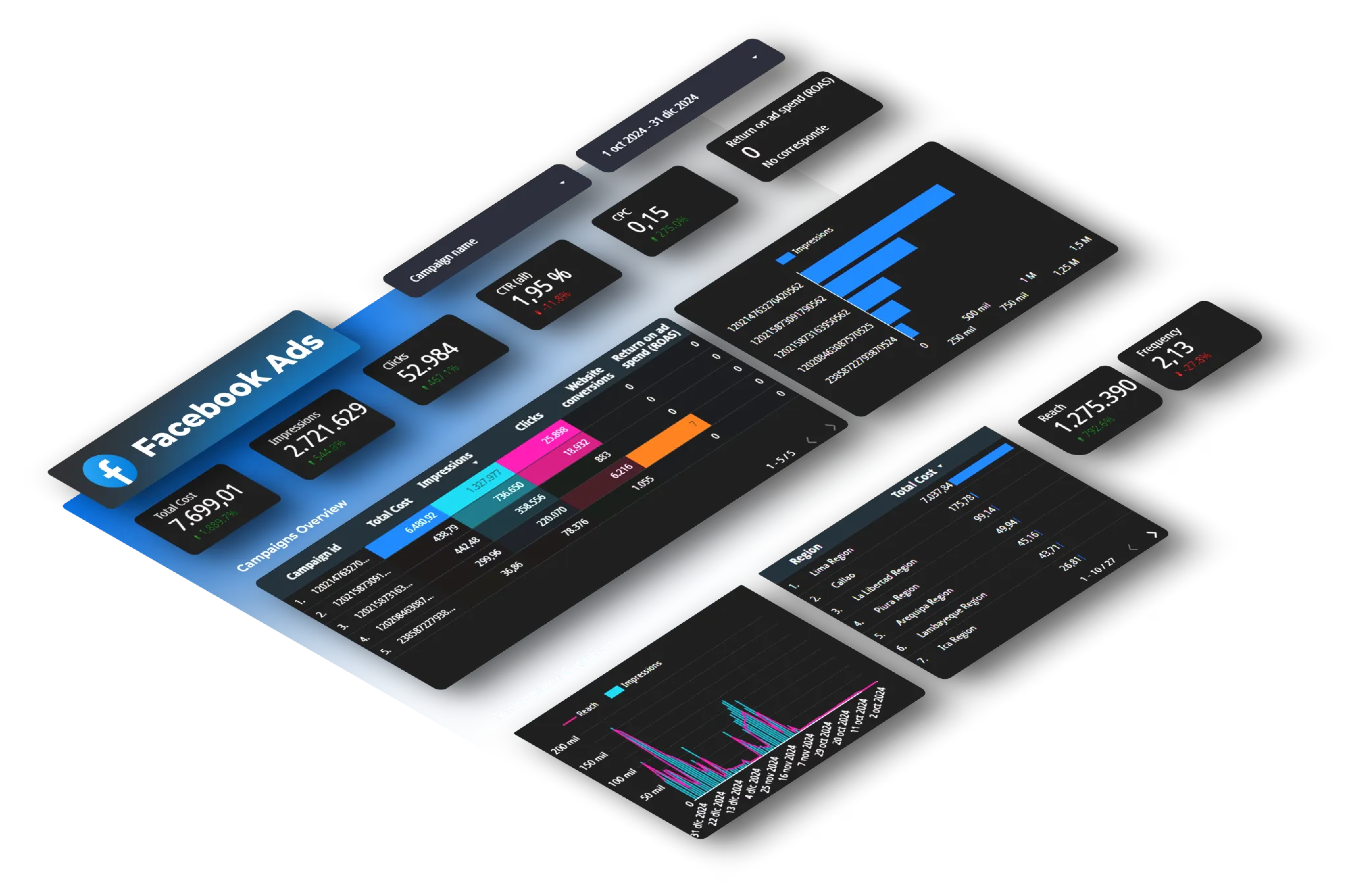
If you're managing multiple accounts, combining Meta with other platforms (Google Ads, LinkedIn, TikTok), or need historical comparisons, you'll want automation. Tools like Dataslayer update when Meta adds new dimensions, so dashboards stay current automatically. That matters when the platform changes every 4.4 days.
What to Do in 2026
Based on these 83 Meta ads changes, here's what actually works now:
1. Build a creative library, not a winning ad
Create 15 to 25 genuinely different ads per campaign. Mix formats, copy lengths, psychological angles. Don't create 15 versions of the same concept.
2. Simplify your structure
Run fewer campaigns. Consolidate ad sets. Stop fragmenting by minor targeting differences. The algorithm performs better with consolidated structure.
3. Use broad targeting
Interest and behavior targeting became suggestions, not restrictions. Creating separate ad sets by audience segment usually creates auction overlap where you compete against yourself.
4. Track aggregate performance
Individual ad CPA misleads you because of the breakdown effect. Judge ad sets by total results, not individual asset efficiency.
5. Don't fear adding new ads
Learning phase resets aren't as destructive as they used to be. Test more. Freeze less.
6. Implement Value Rules cautiously
Only use them if you have data proving Segment A delivers better long-term value. Otherwise, you're paying more for assumptions.
7. Give campaigns more time
Meta now recommends 7+ days before making changes (up from 3 to 4 days). GEM and Andromeda need longer learning periods.
The Real Pattern
These 83 Meta ads changes follow one clear direction: less advertiser control, more algorithm authority.
Andromeda chooses which ads get considered. Advantage+ chooses targeting. GEM chooses placement distribution. Value optimization chooses bid amounts.
Your job changed from "control the campaign" to "feed the system good inputs."
The advertisers struggling most are those still trying to micromanage. The ones succeeding are those who accepted the shift and focused on what they can control: creative quality and variety.
Meta published over 250 updates, tests, and features in 2025. Expect similar volume in 2026.
FAQ: Meta Ads Changes 2025
Q: Does adding a new ad restart the learning phase in 2025?
Not always. Many advertisers report adding ads without triggering learning resets, though Meta's documentation hasn't officially updated to reflect this.
Q: How many ads should I run per ad set now?
Meta removed the 6-ad recommendation. Top performers are testing 10 to 50 ads per ad set, focusing on genuine creative diversity.
Q: What is Meta Andromeda?
Andromeda is Meta's new ad retrieval system that can handle massive creative variation. It matches different ads to different users based on predicted resonance.
Q: Should I still use detailed targeting?
Yes, but treat it as suggestions rather than restrictions. The algorithm will reach outside your targeting when it finds better opportunities.
Q: What's the most important metric to track now?
Aggregate ad set performance and total conversion volume matter more than individual ad CPA or specific placement performance.
Q: Will Advantage+ work for small budgets?
Advantage+ Leads campaigns can work for advertisers who struggle to generate 50+ weekly conversions. Value Rules also help low-volume accounts optimize better.
Q: How do I avoid the breakdown effect?
Stop micromanaging individual asset performance. Evaluate campaigns at the ad set level and give the algorithm time to find equilibrium.



