


TikTok signed binding agreements on December 18 to create a new US joint venture controlled by Oracle (15%), Silver Lake (15%), and MGX (15%), with ByteDance keeping just 19.9%. The deal closes January 22, 2026.
Three things change immediately: all US user data moves exclusively to Oracle's cloud infrastructure, TikTok retrains its recommendation algorithm using only US data, and Oracle becomes the "trusted security partner" auditing compliance.
For 170 million US TikTok users and thousands of advertisers, this restructuring affects how you access performance data, track conversions, and integrate TikTok metrics with other platforms.
Why Oracle Won This Deal
Oracle isn't new to TikTok's infrastructure. Since 2022, TikTok has been routing 100% of US user traffic through Oracle Cloud Infrastructure. What changes is complete data separation: US user profiles, video metadata, and ad analytics now exist entirely within Oracle's US data centers with zero Chinese access.
The January 22 transition eliminates ByteDance's operational control over US data. A US-based leadership team now manages all data handling, with Oracle auditing access protocols.
What Changes for Your TikTok Ads
Your Campaigns Keep Running
The deal affects backend infrastructure, not ad delivery. Your active campaigns continue serving impressions without interruption. TikTok Ads Manager looks identical, targeting options remain the same, and creative formats work exactly as before.
The algorithm retraining introduces temporary performance fluctuations. Expect 2-4 weeks where CPMs, click-through rates, and conversion rates shift as the model recalibrates.
Algorithm Retraining Impacts
According to the internal memo from TikTok CEO Shou Chew, the new entity will be "retraining the content-recommendation algorithm on US user data to ensure the content feed is free from outside manipulation."
Performance baselines reset temporarily. A campaign delivering $2 cost per acquisition today might spike to $3.50 for two weeks before stabilizing around $2.20 as the algorithm adjusts.
Lookalike audiences lose historical context. Your best-performing lookalike audience relied on behavior patterns from global data. With US-only training data, these audiences need time to rebuild.
First-party data becomes more valuable. Customer lists, email uploads, and website visitor remarketing give the algorithm actual conversion data instead of inferred patterns.
Why Conversion Tracking Matters Now
TikTok's Events API sends conversion data server-to-server, bypassing browser limitations. Advertisers using both TikTok Pixel and Events API see 13% more conversions tracked and 15% better cost per action compared to Pixel-only setups.
With an algorithm retraining on limited US data, feeding it complete conversion signals becomes essential. The Events API captures purchases that browser tracking misses, exactly the data a retraining algorithm needs to optimize effectively.
TikTok also recommends enabling Advanced Matching, which improves how the platform matches your customer data to TikTok users. Advertisers using this feature report 37% lower cost per acquisition.
TikTok Marketing API Changes in 2026
TikTok's Marketing API changes in 2026 shouldn't disrupt most advertisers. The Marketing API handles campaign creation, performance reporting, and audience management at scale. It powers third-party integrations, automated reporting tools, and agencies managing hundreds of accounts.
The Oracle transition shouldn't break API access, but three technical considerations matter:
- Authentication may require updates. If TikTok creates US-specific API endpoints, OAuth tokens might need reauthorization. Most integration tools handle this automatically.
- Reporting latency could temporarily extend. TikTok's Reporting API currently has 11-hour data latency. The infrastructure migration might temporarily increase this to 15-18 hours during the transition window.
- Endpoint structure might fork. With separate US and global infrastructures, the Marketing API could eventually split into regional endpoints. This hasn't been announced, but the technical architecture suggests it's possible.
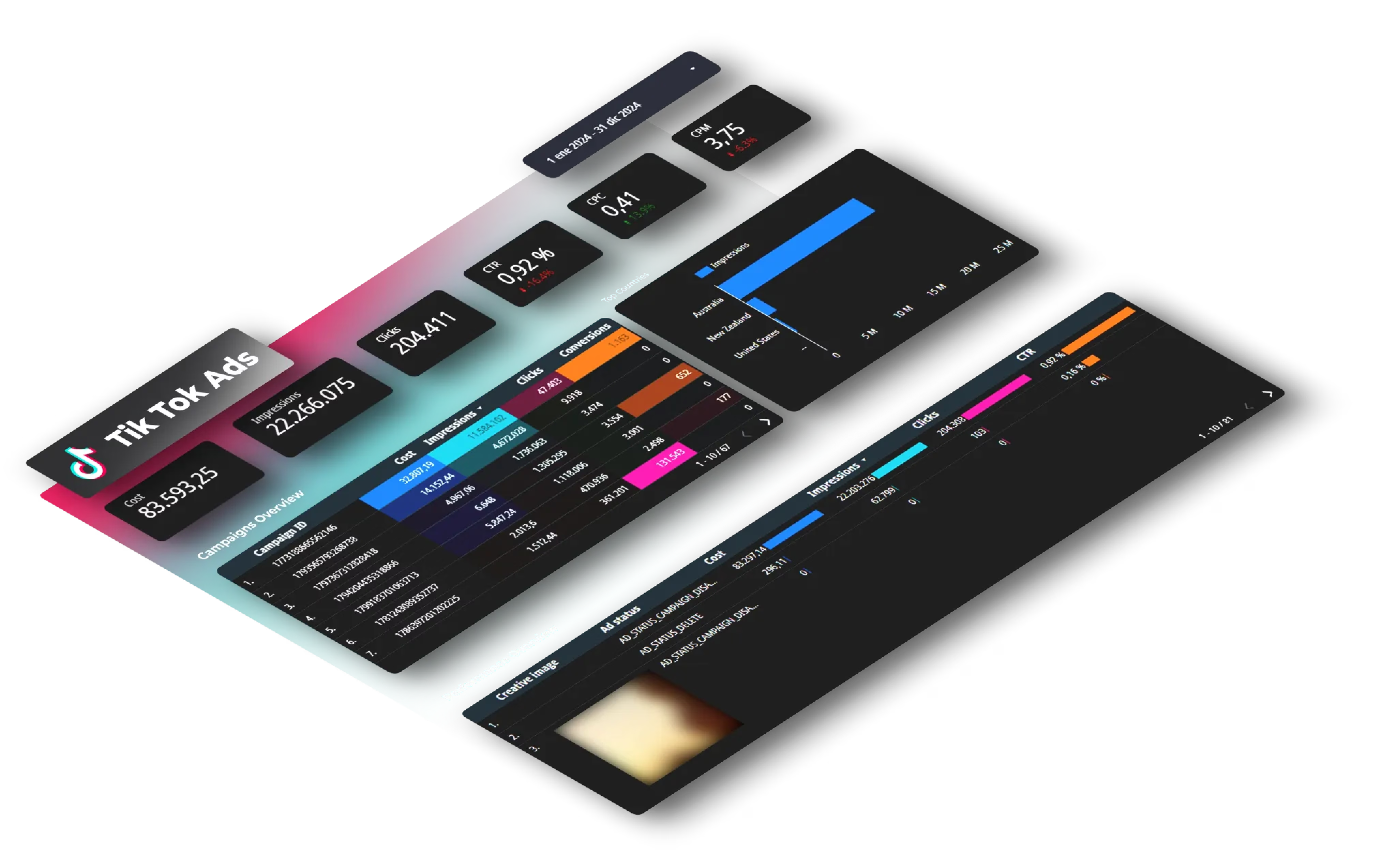
For advertisers using tools like Dataslayer to pull TikTok data into Google Sheets, Looker Studio, or BigQuery, these changes happen behind the scenes. Your data connections adapt automatically without requiring manual updates.
Preparing for January 22
- Deploy Events API if you haven't. Setup takes 1-2 weeks to show full benefits. Don't wait until January 15.
- Document current performance baselines. Export campaign metrics for December 2025 so you can accurately measure post-transition impact. Know your current cost per acquisition, return on ad spend, and click-through rates.
- Verify conversion tracking completeness. Check that all important conversion events (add-to-cart, initiate checkout, purchase) are firing correctly.
- Check your data integration setup. If you're pulling TikTok metrics into dashboards or data warehouses, verify connections are active and syncing properly.
- Test your reporting automation. Run a manual refresh to confirm TikTok data is flowing correctly into your reporting tools.
- Increase creative testing velocity. Have 5-10 ad variations ready to launch. A retraining algorithm needs options to test while learning what performs.
The Broader Picture
This deal ends the ban threat but sets a precedent. If forced data localization succeeds with TikTok, other platforms with international ownership may face similar pressure.
For advertisers, this means more fragmented data environments. Tools that aggregate data across Google Ads, Facebook Ads, LinkedIn Ads, and TikTok become more valuable. Multi-platform reporting and proper data consolidation shift from nice-to-have to essential.
First-party data strategies matter more. Platform-dependent marketing gets riskier when platforms face regulatory uncertainty. Building direct customer relationships through email, SMS, and owned channels provides stability.
What Doesn't Change
Despite the ownership restructuring, several things remain constant: your ability to reach 170 million US users stays intact. Campaign targeting, bidding strategies, and creative formats work identically. TikTok Shop and ecommerce integrations continue functioning.
The changes happen behind the scenes: where data lives, who audits security, and how the algorithm trains. For day-to-day campaign management, you'll notice minimal disruption beyond the temporary performance fluctuation during algorithm retraining.
After the Transition: What to Watch
Enhanced privacy controls. Oracle's audit role may lead to stricter data handling requirements, potentially affecting audience creation, conversion data retention, or customer list uploads.
Attribution model updates. The retrained algorithm might surface different attribution models or introduce new conversion tracking options. TikTok recently added Assisted Conversions tracking, which shows when TikTok introduced customers who converted through other channels.
Regional API changes. If TikTok creates separate API endpoints for US versus global operations, advertisers running multi-region campaigns will need to manage two connections.
Bottom Line
The TikTok-Oracle deal resolves the ban threat but introduces temporary turbulence. Your campaigns keep running, your data stays accessible, and your ability to advertise to US audiences remains unchanged.
The transition window, late January through mid-February 2026, will bring performance fluctuations as the algorithm retrains. Plan for 2-4 weeks of higher CPAs and lower conversion rates before performance stabilizes.
The advertisers who handle this smoothly already have proper conversion tracking deployed, maintain diverse traffic sources, and use reporting systems that adapt to API changes automatically.
January 22, 2026, is the closing date. Make sure your tracking is solid before then.
Frequently Asked Questions
Will my TikTok campaigns stop running on January 22, 2026?
No. Your campaigns continue serving ads without interruption. The deal affects where data is stored and how the algorithm trains, but not ad delivery. Expect performance fluctuations for 2-4 weeks as the algorithm recalibrates.
How does algorithm retraining affect campaign performance?
Cost per acquisition might increase 20-40% for 2-3 weeks before stabilizing. Lookalike audiences perform less predictably since they lose global behavior patterns. First-party data becomes more valuable because it gives the algorithm actual conversion data instead of inferred patterns.
Should I pause campaigns during the transition?
No. Pausing loses momentum and the algorithm stops learning from your account. Instead, monitor performance closely, be prepared to adjust bids if CPMs spike, and maintain higher creative testing velocity. Give campaigns 3-4 weeks post-transition before making major budget decisions.
How do I prepare my conversion tracking?
Deploy TikTok's Events API if you're only using the Pixel, advertisers using both see 13% more conversions tracked. Enable Advanced Matching to improve customer data matching. Share multiple conversion events (add-to-cart, initiate checkout, purchase), not just purchases. Verify all events are firing correctly before January 22.
Will historical campaign data transfer to Oracle infrastructure?
Yes. TikTok's agreement specifies the US joint venture is "responsible for US data protection, algorithm security, content moderation, and software assurance," which includes maintaining historical performance data. Your metrics, audience insights, and campaign history remain accessible.
Does this affect TikTok advertisers outside the United States?
Not directly. The deal specifically restructures US operations, global TikTok remains under ByteDance's structure. However, advertisers running multi-region campaigns should monitor whether separate API endpoints emerge for US versus global markets.



